Showing posts with label art. Show all posts

Friday, May 3, 2013

Kambanite: International Children's Monument and Park in Sofia


This was only a two-day workweek because of several holidays that got mashed together the first weekend in May: the 1st of May (for everyone outside the United States, this is labor day), the Bulgarian Orthodox Easter holidays (which happened to fall very late this year, about a month after the Roman Catholic ones) and St. George's Day (a religious feast day and national holiday, as St. George is the patron of Bulgaria's military). Anyway, all this celebrating means a six-day weekend and I have already done quite a bit of sightseeing in my time off.

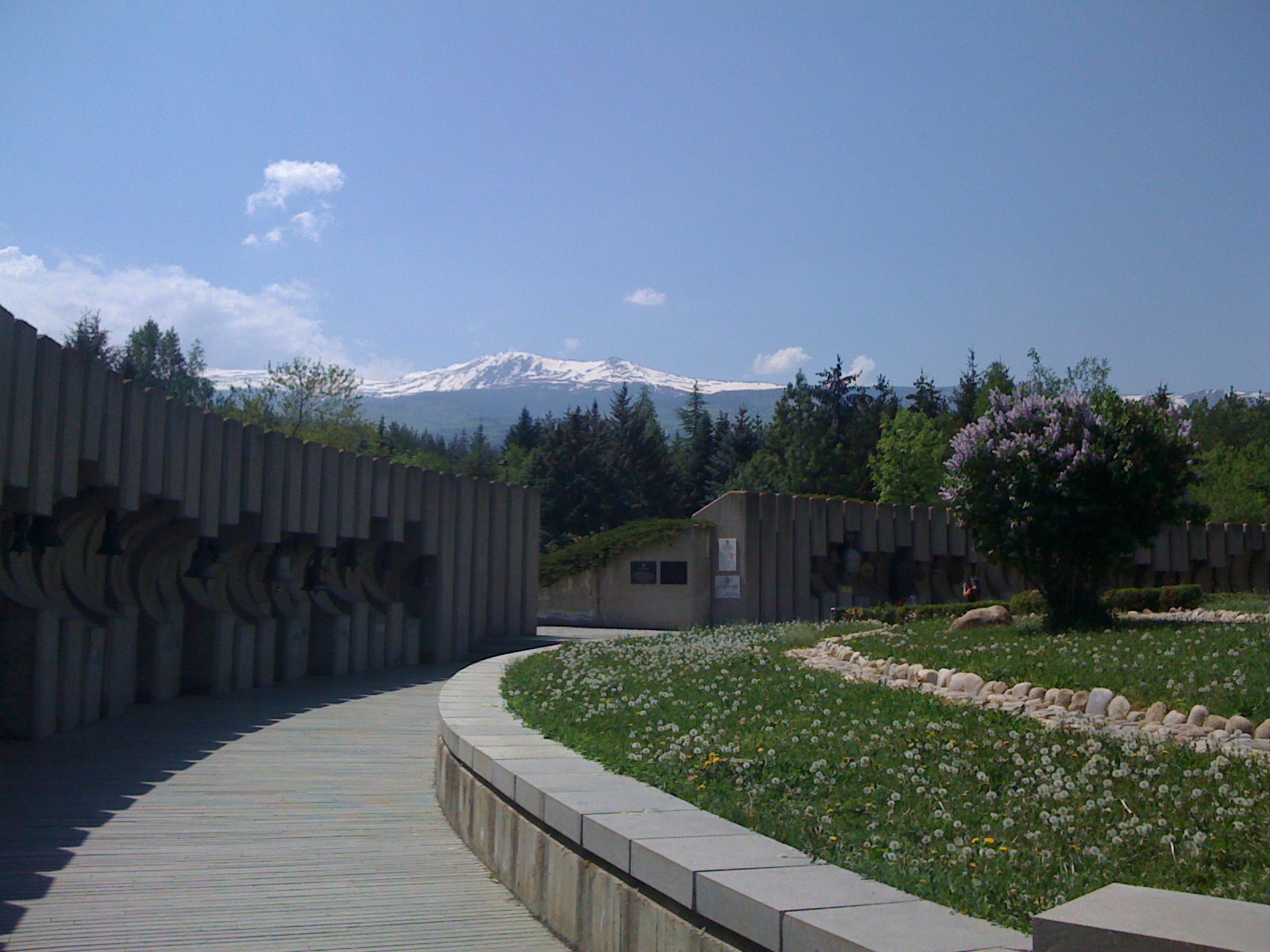
On May 1st Kiril and I went to Kambanite (The Bells) monument and park, dedicated to children all over the world. The monument was erected by Lyudmila Zhivkova, the daughter of the former Communist leader Todor Zhivkov, who was deposed in 1989. Zhivkova was a controversial figure but also a respected patron of the arts, and she established the monument through the "Banner of Peace" organization with support from UNESCO.


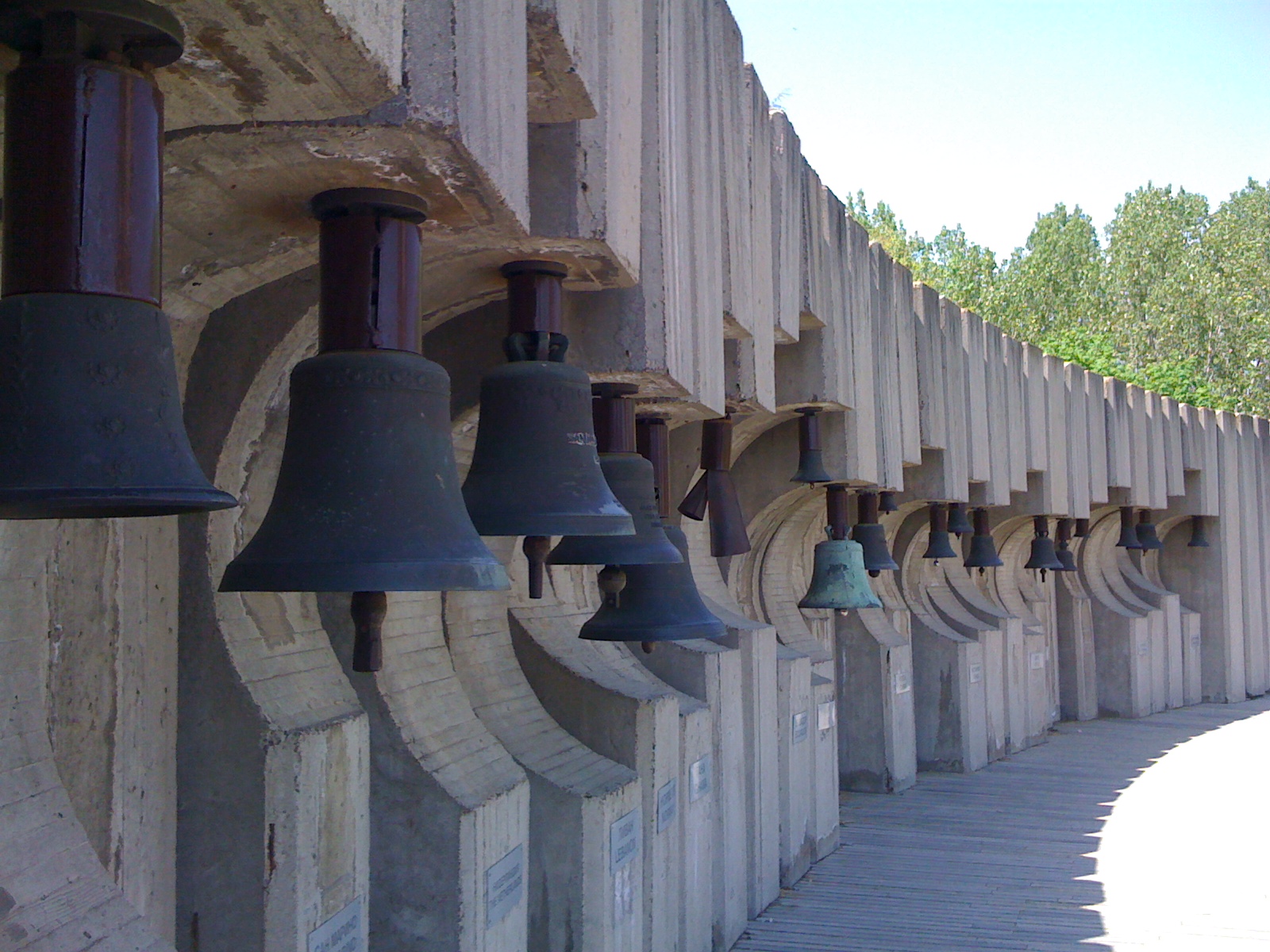
The park is made up of a circular pattern of bells donated by different countries built around a concrete tower holding seven more bells, meant to represent the seven continents. Having been created during the Communist period, the monument and park were neglected for many years until Zhivkova's daughter (also a fashion designer) started a campaign to restore it. Today many of the original bells are missing, but there are still signs of a bygone era there: a bell from Yugoslavia, Czechoslovakia, the USSR and both the German Deomocratic Republic and the Federal Republic of Germany. The are also bells from North and South Korea, Syria, Angola, China, Thailand, Nicaragua, Zimbabwe and many other countries around the globe. The United States' bell is quite small compared to Bulgaria's whopping 1300 kg one (commemorating 1300 years of Bulgarian history in 1981). But there are also some new additions, including bells donated by NATO and the Rotary club. I found Poland's bell, too...

  
On one side of the park there is a wall with plaques acknowledging the accomplishments of young Bulgarian athletes, artists and scientists. One of them is Ivet Lalova, Bulgaria' famous record-breaking sprinter. Read more about her in my post for International Women's Day last year.


These bells represent all the Bulgarian children living abroad. During the Communist period many families were forced to flee the country because of political differences. This was the case for my grandfather, who left Poland when it was invaded by Nazi Germany and could not return after the war when his country had joined the socialist bloc. As a result, there are many Bulgarian, Polish and other Eastern European families living abroad, especially in the United States. Unfortunately, there are still large numbers of young people who have to move abroad for economic opportunities. This is a growing concern within Bulgaria and many other European countries with struggling economies and limited options for employment.
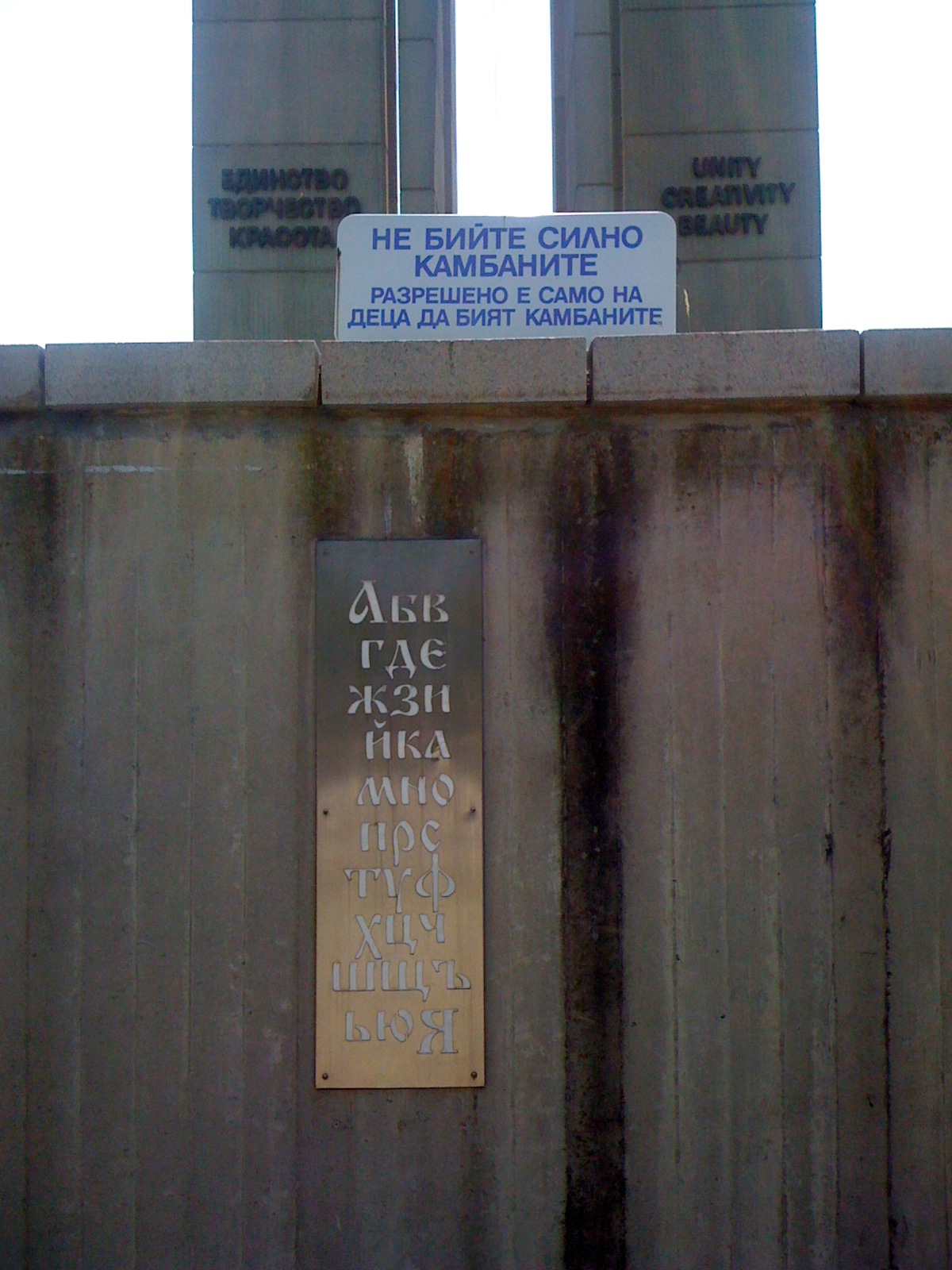

And finally, behind the central tower (which reads "Unity, Creativity, Beauty" in Bulgarian and English) there is a small sign asking visitors not to ring the bells loudly. It also states that only children are allowed to ring the bells. :)

Saturday, September 1, 2012

There's Just Something About Mary

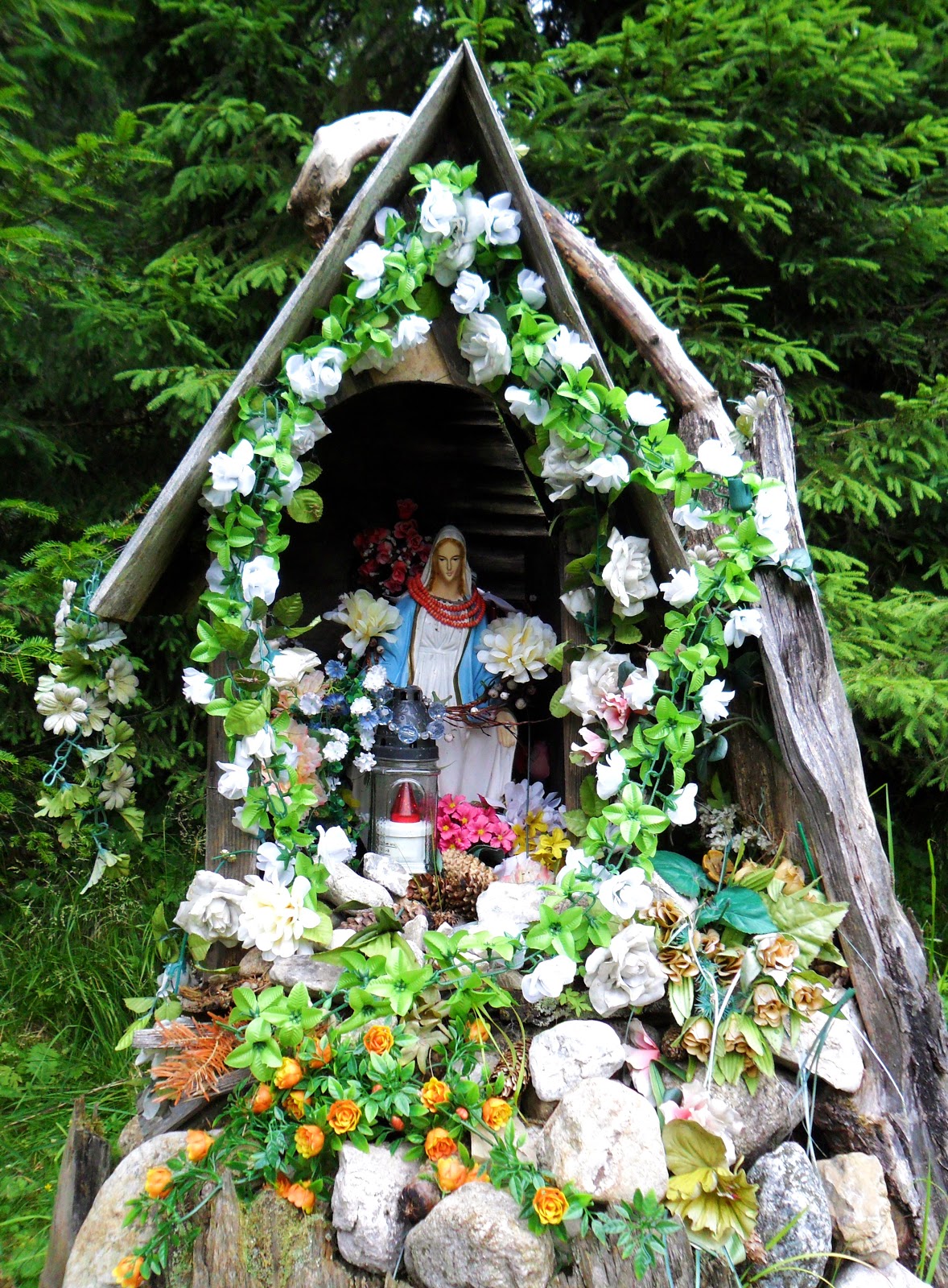
Walk through any town in Poland for ten minutes and you will find at least one of these iconic shrines to the Virgin Mary. A shrine or grotto built to venerate the Catholic Church's most worshiped saint can be found on many street corners, next to churches or even in national parks throughout the country.   


A grotto next to a small river in the Chocholuw Valley nearby the Tatra Mountains resort town of Zakopane.


This one is located in what looks like an abandoned lot on one of the main streets leading to the bus station in Zakopane. Southern Poland is considered to be more deeply religious than the north, and the town even has a chapel financed and built by local citizens as an offering of thanksgiving when the late Pope John Paul II survived an assassination attempt in 1981.


This alcove is on a street corner in the old Praga district of Warsaw, adjacent to a newly restored vodka factory-turned art facility that currently houses the Praga History Museum. I think that these shrines are quite beautiful, and wonder who takes the time to so carefully maintain them?

Sunday, June 10, 2012

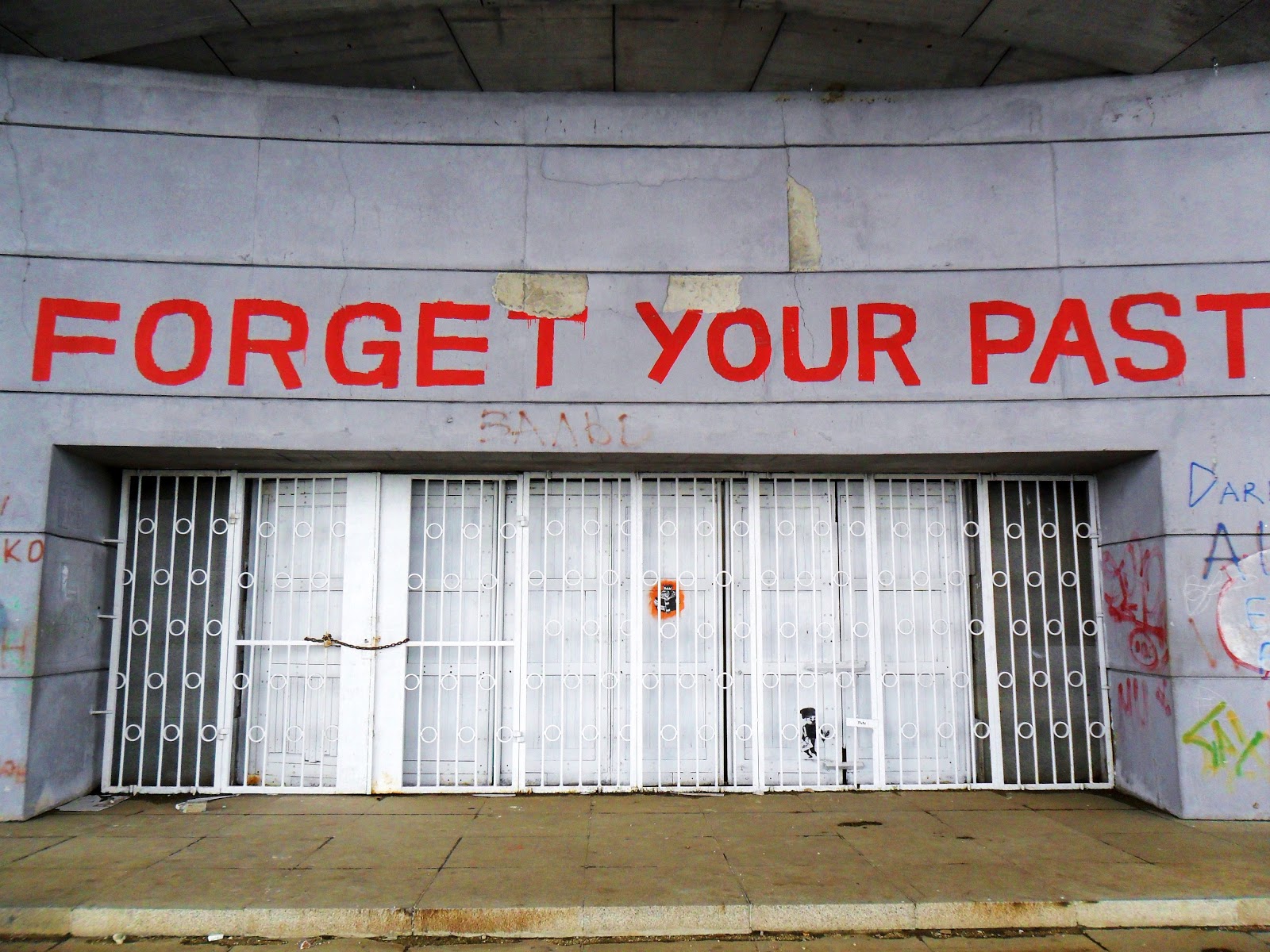
Forget Your Past

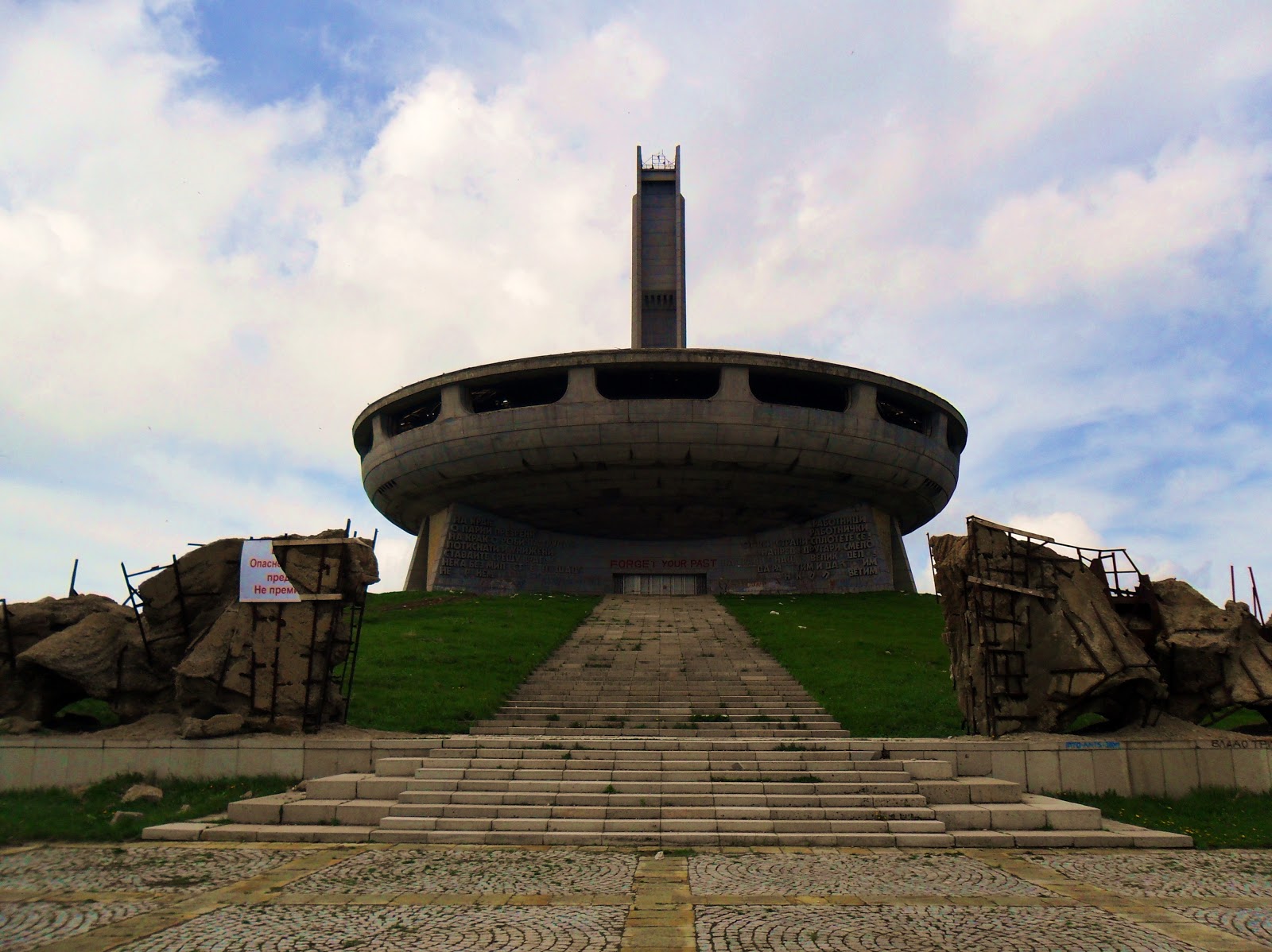
On our recent road trip through Central Bulgaria, Kiril, Laura, Sydney and I stopped off at what has become a popular off-beat tourist attraction: the space-like Bozludja monument near Shipka. This monument, built in 1981 to commemorate the founding of Bulgaria's communist party a century earlier, was once a proud symbol of the ruling government. Today, it sits crumbling atop the windy mountain where it was built over thirty years ago, and is very likely to fall apart completely if nobody steps in to preserve the structure.


Up until about a month ago, visitors could (illegally) enter the building because although there was a sign warning that the structure was unsafe, there was no lock on the gate. When we went there was a very sturdy lock and chain on the outside doors- comforting to me, because let's face it I am just not that adventurous. I'd rather not have pieces of ceiling tiles falling onto my head or breathe in the toxic asbestos that surely insulates the walls. Anyways, the building itself isn't very interesting, except that it looks like a giant spaceship perched on top of a hill. There's even a tail section with the socialist red star painted on either side. All of the letters on the outside are falling away, the roof is leaking and birds inhabit the upper floors. There is some graffiti scattered around the sides, but it's mostly just poorly drawn scribbles, with a few exceptions.


This message (intriguingly written in English- begs the question of who actually put it there) proclaims one current attitude towards the recent past. Or maybe it's supposed to challenge the complacency with which many choose to forget painful, although important, memories. One thing is certain: this structure has been forgotten by those in charge of its maintenance. Even the attempts to bar access are laughable at best- besides the aforementioned door lock, the only other effort to prevent people from visiting the monument is a road block with a warning sign. Taking a closer look, however, one sees the tire tracks where many cars have simply gone around the road block, onto the grass and back on the road again.


Whatever the future may hold for Buzludja, it is definitely a distinctive landmark for Bulgaria in more ways than one. If it wasn't for its remote location, I'd say it would make an excellent extension of the Sofia Museum of Socialist Art. For now, it's just another roadside attraction, although quite far off the beaten track.

Saturday, March 17, 2012

Film review: "The State of Shock"


"A bittersweet comedy about capitalism and changing social values during the past 20 years, which have completely transformed the Eastern European countries. A story about losing and regaining the power of honesty." (Sofia International Film Festival website)


I was so impressed by this newest feature film by Andrej Košak (Slovenia). A collaborative effort between Bosnia and Herzegovina, Bulgaria, Macedonia, Serbia and Slovenia, the film centers around a Yugoslav metal worker who goes into a state of euphoric shock when he is awarded with a communal apartment at the first of May worker's celebration in 1986. He wakes up from this catatonic state ten years later to find his entire world changed: Yugoslavia no longer exists, capitalism has replaced the socialist system he loved so much and his wife has married his best friend. As he struggles to adapt to this new reality, the audience witnesses some of the violent economic and political changes taking place in the region today. Most of the people he meets think he is crazy because he lived in an institution for so long, but as the film draws to a close it appears that he may be the only sane person left. The script was touching, funny and thought-provoking. 


Because I attended the Bulgarian premiere at the Sofia International Film Festival, the director and leading actor (Martin Marion) were there to answer audience questions at the end. A testament to how much modern technology has permeated everyday life, Marion revealed how he first met Košak: a few years ago he read a comment the director had written on a mutual friend's blog and realized they were both living in Berlin. He contacted the blogger on Skype, got Košak's phone number, called him and they soon began working together on the film. Originally rejected in Slovenia, they finally won the support of several screenwriting organizations and local production companies to fund the project. The result is one of the best films I've seen in years, and I would recommend it to anyone interested in the recent past of the Balkans or Eastern European society in general.


You can watch the trailer here. 

Wednesday, October 26, 2011

Random internet trinket: "Europe According to Bulgaria" by alphadesigner.

Europe According to Bulgaria
www.flickr.com/photos/alphadesigner/4001490673/ 
I found the photo on Brainpickings, and while the artist has a lot of other amusing takes on "European stereotypes," since he's a Bulgarian I thought this would be a good one to share. The comments on Flickr are almost as interesting as the artwork itself; some more self-critical Bulgarians added a slightly harsher slant to the typical Bulgarian outlook towards the rest of Europe (especially on the historical ties with Russia and Turkey). I like how his captions add some necessary humor to what might otherwise be negative perceptions of outsiders. Interestingly enough, his "The World According to Americans" map places Bulgaria in a corner of Southeast Europe simply labeled "Dracula," which is usually associated with Romania. So it's either a comment on how Bulgaria and Romania are almost always lumped together or the fact that most Americans probably don't know that Bulgaria exists. Which is a shame. 

Sunday, October 16, 2011

Ukrainian Sand Art

Last night I had dinner with my neighbors, P and T, who showed me this video from the final competition on the TV show "Ukraine's Got Talent" in 2009.


I can't believe I hadn't seen it before. The visualization of the war and emotion of the faces and figures she draws are stunning. I really think that everyone should see this video!

Speaking of Ukraine, a couple of friends went there last year for spring break and it looks pretty awesome. Maybe I can find time this year to make a trip... Laura Y and I were discussing the possibility of a ferry from Varna to Odessa. It's unbelievable how close we actually are to so many other exciting destinations! 

Wednesday, October 5, 2011

The Museum of Socialist Art


As I mentioned earlier, one of my favorite things to do here is meet new people and discover more about the city. Of course, there are a lot of things that I haven't seen here yet, one of which was the new Museum of Socialist Art. I first read about it this summer on a (new) friend's blog and have been longing to go since then. I finally got my wish on Sunday when I visited the museum with another Fulbright friend, and although it was small compared to similar ones I've been to, such as the Statue Park in Budapest, I thought it was very well presented and interesting. 


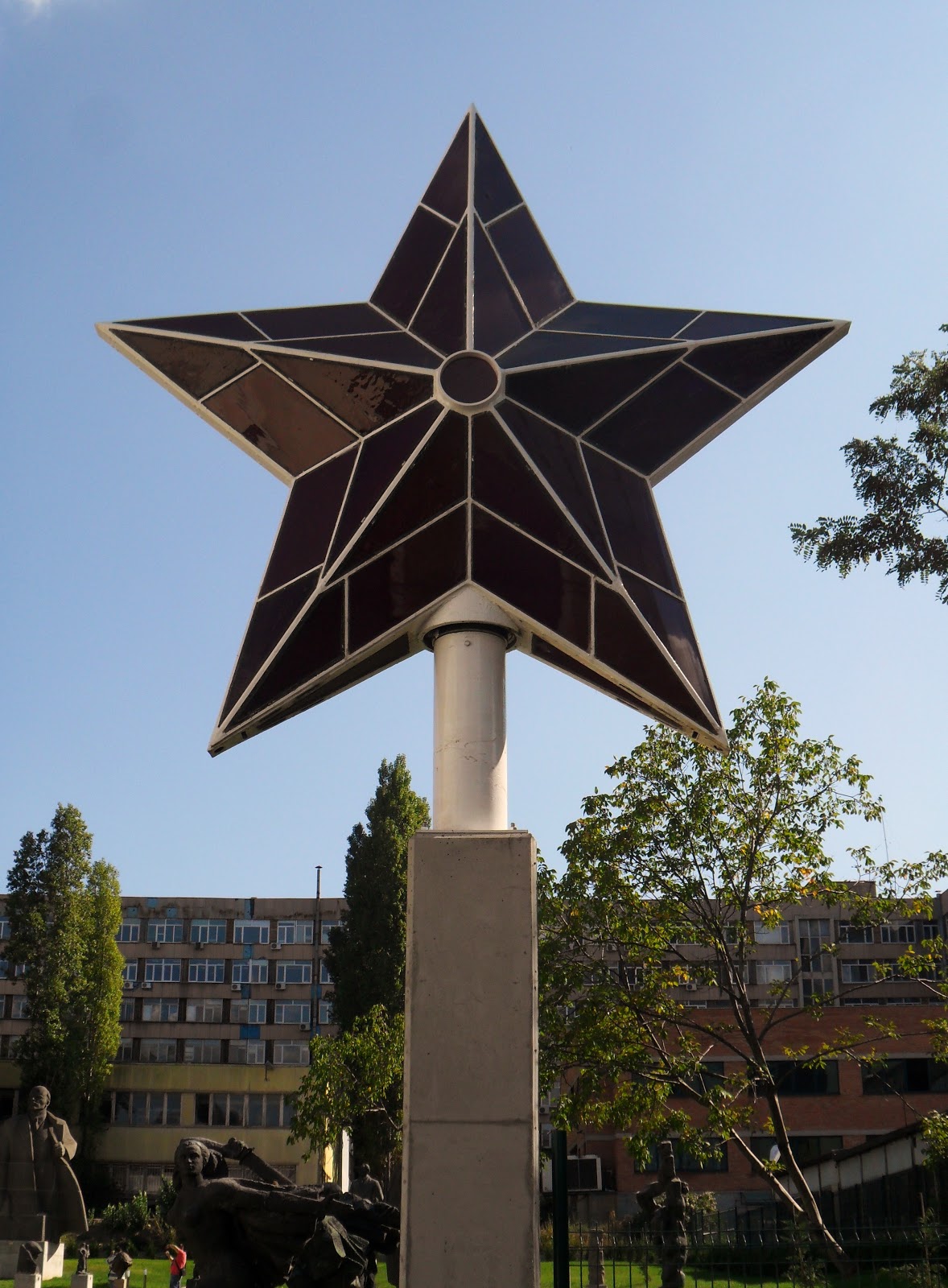
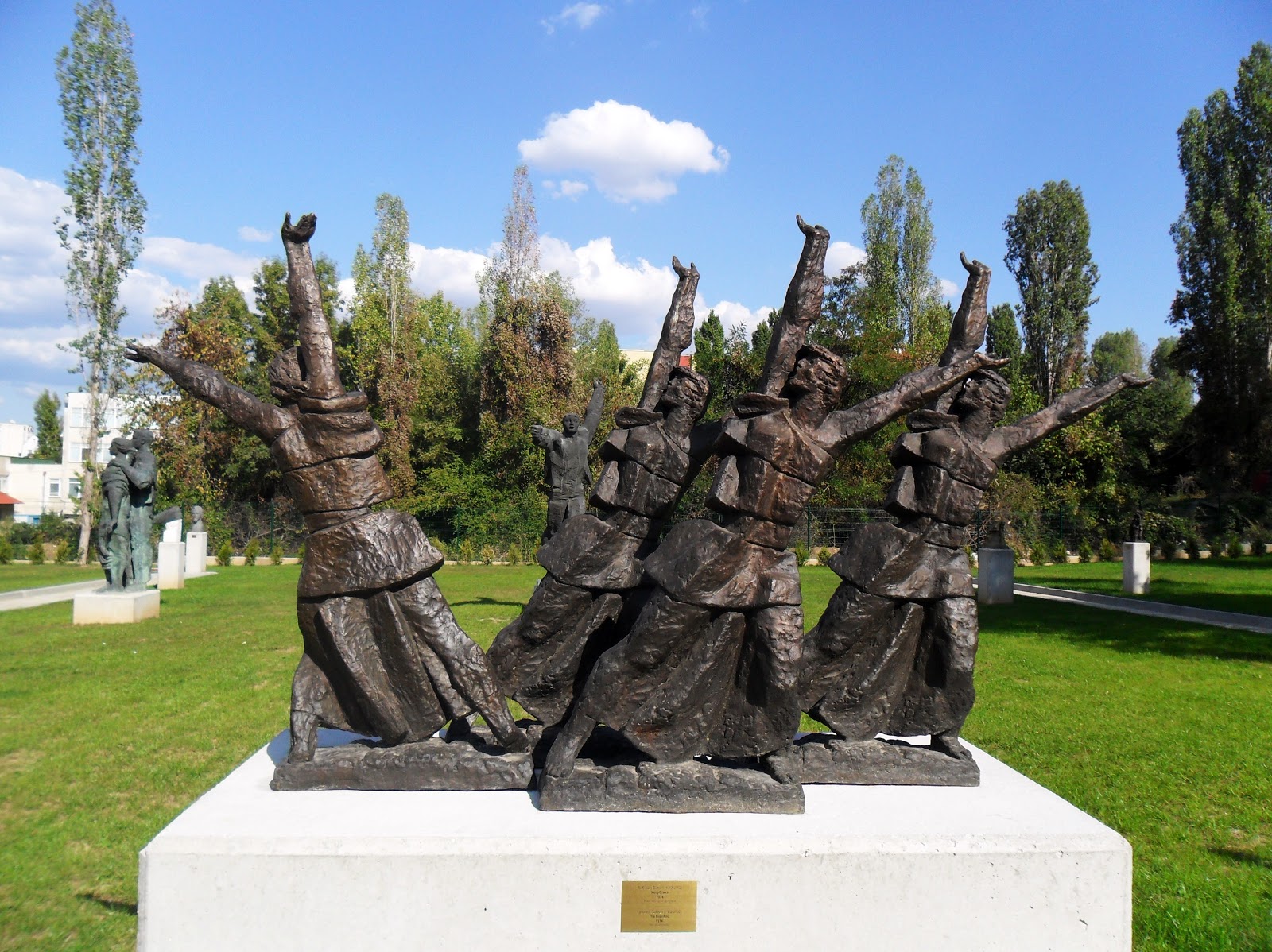
For those unfamiliar with the legacy of these objects, socialist realist art, whether in sculpture, painting or another form, were the only kind of artistic expression permitted under communism throughout the former socialist bloc. The style is characterized by larger-than-life forms portraying the values of hard work and sacrifice, or memorializing a particular leader or event. Big names at the museum include Vladimir Lenin, Che Guevara, Georgi Dimitrov and Todor Zhivkov. The red star you see here used to sit atop the so-called "Party House," or communist party headquarters in Sofia. Its current location at the museum is a major improvement from its previous one, sitting behind a chain link fence in an abandoned corner of the now-closed Sofia Bath House. Unfortunately, many of these historical artifacts were lost or destroyed during the early transition period (most people can recall scenes of joyous protesters toppling gargantuan statues of former dictators in 1989) and efforts to preserve them have been more concentrated in some places than in others. 


Of course, this park isn't the only place you'll find these statues in Bulgaria. Just walk down the main street in any town and you'll see plenty of examples which have been left to defacement and decay (which is not necessarily a bad thing, according to some). What I like about the museum is that it clearly recognizes the need to include this part of history in the overall narrative of the past. Because art in many ways speaks for itself, these statues are a quiet reminder of the symbols of that bygone era.

Another section of the museum is a "multimedia gallery" which features film footage of young pioneer parades, propaganda films, May Day celebrations and the like. It didn't have any explanations or English subtitles, for that matter, but maybe it's still a work-in-progress. The third and final gallery displays works on loan from the National Gallery, some of which were shockingly grotesque, dark and bloody. Others showed the brighter side of things, such as women carrying bouquets of flowers and cheerful soldiers returning home. There was a cafe overlooking the park which hadn't opened yet, so I plan to go back for a coffee and enjoy the unique view.


The Museum of Socialist Art (Muzei na Sotsialisticheskoto Izkustvo) is located at number 7 "Lachezar Stanchev" street, near the G.M. Dimitrov metro station.