Showing posts with label bulgaria. Show all posts

Monday, August 19, 2013

Welcome, new ETAs!

Last week I was back again at the orientation for Fulbright English Teaching Assistants. I am a former ETA (2010-2012) and presented one of the topics last year at the same orientation, which was two days long. This year, however, the program has changed; it is longer, more detailed and designed to provide a more comprehensive preparation for the new teachers. Working closely with other English teachers as well as the Department for English and American Studies at Sofia University, I helped carry out a five-day training for the majority of the 28 American Fulbright Fellows who will be teaching in Foreign Language Schools across the country for the next ten months. My sessions included lesson planning, online resources, classroom management, teaching multilevel students and cultural adjustment. I also presented information about some of the extracurricular activities and projects some ETAs have become involved with in the past, including my own (Learning Through Our Differences).

When Iliana at the Fulbright Commission emailed me to invite me as a lecturer at the ETA orientation this year, I was more than thrilled. I've had the pleasure to meet more than 70 American Fulbrighters in Bulgaria during the time I've lived here; I've also met many Bulgarian alumni who have studied in the United States and have since returned home. All of them have very different backgrounds, lifestyles, beliefs and interests but the one thing they do have in common is the desire to build bridges across nations, mountains and oceans, or perhaps more importantly, between people. As U.S. Ambassador Ries said in her welcoming remarks to the new grantees, the core of the Fulbright program is people-to-people diplomacy. I am proud to be a part of the Fulbright legacy in Bulgaria and a continuing supporter of the activities carried out by the Commission.

Now that I have had some more time and experience between my former role as an ETA and my current one as an elementary school teacher, it was easier for me to reflect on the early days of my teaching career. Three years ago I really had no clue what I was getting myself into; the first day of classes I just sort of showed up at school and hoped for the best because I had no idea how or what to prepare. Eventually I settled into a routine (at least until the second semester) and figured out what worked best in each of my classes. But in hindsight there are many things I would have done differently had I had the experience and knowledge I have now. I don't think that any experiences we have can be labeled as bad, really, because we always learn something from them. And it was through reading about (and observing) good teaching practices that I realized just how many mistakes I made that I didn't even know I was making at the time. I have just a few quick tips, most of which are based off some mistakes I definitely made, and a couple of which I continuously need to work on:

1. Don't sweat the small stuff. When an unexpected problem arises, find a way to diffuse the situation or simply move on. It's not worth it to over-dramatize trivial things, like a broken printer or last-minute schedule change.

2. Be an enthusiastic leader for your students. Accept the responsibilities of being a role model with grace, and listen to their needs. Give them whatever support you can to help them achieve their learning goals.

3. Be over-prepared. That means planning for lessons to take less time than you think they will, and having a back-up lesson or activity in place. Plan for technology to fail. This will happen, but you don't have to let it ruin your day.

4. Spend more time in Bulgaria. Yes, the opportunities for traveling abroad are enticing, and this may be your first time living in Europe. But don't overlook the amazing places to see here, or underestimate the importance of learning the language. See #5.

5. Learn Bulgarian! To the best of your abilities, even if that means hiring a tutor or spending some time online with a program like LiveMocha. Tell your friends and colleagues to correct your mistakes so you can be sure that others will understand you. Even if you can't roll your Rs, people will warm to you immediately if you start a conversation in their own language.

I hope that all of the new ETAs, researchers, lecturers, students and scholars will enjoy their time in Bulgaria. And I look forward to meeting all of you again (or for the first time) in Sofia. 

Добре дошли!

Monday, July 8, 2013

Demanding a better future

For more than three weeks now, tens of thousands of protesters have been marching through central Sofia, each day at 6:30 P.M. Their demands include the dismantling of the current government, which did not win the snap elections in May but barely managed to piece together enough members of parliament for a 51% majority. 

The political situation here has been ignored and under-reported not only in the foreign press but also at home. Many local media networks, most notably newspapers, omit any information about the protests from the headlines. Some television reporters have begun masking their identities and choosing not to display their network logos out of fear of retribution from angry protesters who resent the lack of accurate news coverage on the protests. However, the protests here have been largely peaceful, with no violent clashes with police as in Egypt and Turkey. 

The limited international news coverage of the situation in Bulgaria begs the question: "Is the world watching?" and if not, what happens next? The current government seems satisfied enough to carry on with business as usual while further protesters assemble outside the National Assembly during the workweek, and denies or plays down the protests' influence. The leader of the ultra-nationalist right wing "Ataka" party, whose neo-fascist, xenophobic and racist ideology is an ugly smear on Bulgaria's image within the European Union, began carrying a gun with him and declared his plans to make protesting "illegal." His inflammatory statements have already merited the creation of a new Facebook and Twitter hashtag, encouraging protesters to ignore him completely.

What could a long-term solution to this deep-rooted public anger be? 

"Bulgaria’s best hope is a technocratic government that reforms the judiciary, changes the electoral code, fights organised crime and corruption, and ends the opaque dealings of the government so that young, untainted and talented people find it attractive to enter politics." 
- The Economist

The people currently protesting down Tsarigradsko Shose, past Sofia University and towards the National Assembly are the future of this country. They are not only young people, but the majority of them are. Many of them want to stay here and raise their families here, despite the lure of better conditions abroad. They deserve the attention and support of the whole world, just like so many peaceful demonstrations before them.


Sunday, June 23, 2013

Bulgarian Road Tripping with Dad

As you may be aware, I recently had to cancel a trip to Seattle (where I had hoped to catch up with my family and friends after a year and a half away) because of a serious medical condition. Although I have been out of the hospital for several weeks now and I am feeling much better, it's still dangerous for me to travel for long periods of time. That's why I won't be visiting my family for a while. :(

Dad's first Bulgarian meal

Luckily, my Dad was able to come visit me and also see Bulgaria for the first time. It was so great having him here, and really brightened my mood. During his two weeks here we were mostly at home, as I find myself getting tired easily and needing more rest. But we were also able to take him on a short trip around the country, our final destination being the Black Sea. With Kiril driving and Dad in the front seat, I was able to stretch out across the back seat and keep my leg elevated while on the road.

The southern highway to the Black Sea (Sofia-Burgas, or Thrakia Highway) passes close to Plovdiv, one of Bulgaria's oldest and largest cities. We spend a little time walking up to the Roman amphitheater and then having lunch in a former Dervish monastery that was constructed atop one of the old city's Roman walls (visible downstairs and from the patio outside).

Me and Dad in the center of Plovdiv

Our next stop was a Thracian temple and royal tomb, recently discovered near the village of Starosel. The temple, which dates back to the 4th century B.C., is the largest one found so far on the Balkan peninsula. A tour guide explained that the temple was used for worshiping the three dimensions of sky, earth and underworld. Three natural colors were painted in a repeating pattern around the walls and are still visible today. After that we stopped in nearby Hisarya, a town famous for its mineral water and Roman history. There are many resorts there where you can try out the healing properties of the famous water for yourself. It took us longer to find the southern gate of the late Roman wall, nicknamed "The Camels" than we spent looking at it, but it was getting very hot so we kept driving to our next destination.

In front of "The Camels" southern fortress wall in Hisarya

We spent the night in Veliko Turnovo, but on the way passed through the Shipka Pass. This landmark is an important part of Bulgaria's independence period, and a fierce battle was fought there between Bulgarian rebels and Ottoman soldiers. Last year I visited the monument and museum on top of the peak, but this time we just drove through on our way to Bulgaria's medieval capital. Our hotel was located right next to the Tsarevets fortress in the old town, which would have been perfect for watching an evening light show on the fortress walls. However, after a long day of driving and waiting a long time to eat, we had dinner in the hotel restaurant and went to bed early before starting another day of sightseeing.

The Holy Forty Martyrs Church in Veliko Turnovo

The next morning, after exploring the ramparts of Veliko Turnovo's medieval fortress walls and church (I opted to wait on a shady bench while Kiril and Dad made the hike), we drove down to the Holy Forty Martyrs Church on the banks of the Maritsa River. This church has an interesting history, and has also borne witness to some of Bulgaria's historical milestones. Tsar Kaloyan, one of Bulgaria's most legendary rulers, is buried in the church. Under Ottoman rule, the church was refashioned into a mosque, and many of its paintings and murals were destroyed. In 1908, Tsar Ferdinand declared the independence of the whole territory of Bulgaria inside the church. There is one remaining section of the church with original foundations and the rest has been restored. The newer interior is bright with white painted walls, which is uncommon for Bulgarian churches but has a very airy and calming feel.

Foundations of a pagan temple and first Christian Basilica at Pliska

After leaving Veliko Turnovo, we headed east towards Shumen and eventually got to Pliska, the capital of the first Bulgarian Empire from the year 681. It was founded by Khan Asparuh, who established the first Bulgarian Empire. Not a lot is left of the original buildings in the complex, as many of them were made from wood, but the stone foundations of a pagan temple, two basilicas, the royal palace, a bath house and several outlying buildings remain. A small museum describes the site's history and provides reconstructions of all the original structures.

On the Black Sea in Sozopol

Finally, we reached our end destination and checked into our hotel in Sozopol, just a half hour south of Burgas. Incidentally, we stayed at the same hotel as the first time I visited the Black Sea almost three years ago. I love staying in the old town because it is so charming and peaceful. And Sozopol is easily my favorite town on the coast, as it boasts small, charming cobblestone streets, two beaches, ancient walls and ongoing archaeological investigations. A recent one was the reported discovery of some relics of St. John the Baptist, which were probably transferred to the island of St. Ivan (St. John in English), just a kilometer from Sozopol's public marina, by a Christian monk in the 5th or 6th century. The relics are on display in the restored Church of Saints Kiril and Metodi, and the waterproof container likely used to transport them is in the regional historical museum. That museum also currently houses one vampire skeleton, part of another exciting and fascinating recent find near the town.

Medieval ruins of a monastery on the island of St. John the Baptist

We were able to visit the island by boat, and the roundtrip only cost us 40 leva, or roughly $9 per person. Our captain Dimitar told us that he has worked with the archaeologists working on the island, and that his boat actually transported the relics to the mainland. The island is small, and today mostly a nature preserve. We saw lots of young seagulls getting ready to take their first flight. A lighthouse built in the late 19th century still stands there, and the ruins of two churches can be viewed easily by tourists. The older one is where the relics of St. John were found, buried under the altar, in the summer of 2010.

Me and Kiril, on the boat ride back to Sozopol

We didn't make any more stops on our return trip to Sofia, so it was much faster, and Dad had just enough time to get his bags packed up before heading home to Seattle the next day. He was very happy at the end of our trip that he got to see so many parts of Bulgaria. But still, there are many more to see so I hope that he will come back again soon!

Tuesday, June 18, 2013

"The world is on fire"

In case you haven't seen Bulgaria in the news headlines lately (which is usually the case, unfortunately) there have been massive protests all over the country, much like what is happening on now on the streets of Istanbul and Brasilia. You can follow the protests on Twitter with the hashtag #ДАНСwithme. 

For more information on the background of the current protests, and how they are different from the earlier ones that led to the resignation of the previous government back in February, read this blog post. An imploring and heartfelt open letter asking Europeans and others to help publicize the current situation can be read here. After a brief web search I came up mostly empty with current articles from the major international news agencies. Following the Twitter page and reading the English-language sites in Bulgaria (or better yet- Google translated versions of sites like Dnevnik) will probably remain the best ways to keep up with events until they get more international coverage.

Hence this blog post. If you are reading this outside of Bulgaria, please share information about the protests in Bulgaria with your friends or find a photo of the protests to share on Twitter. While I am in no way informed enough to make speculations about Bulgaria's political future, I do believe that the only way for Bulgarians to make their voices heard is by exercising their right to protest against the corrupt practices of the current government. And others can help support them by speaking out against political corruption and abuse everywhere. So please spread the word about Bulgaria and help the protesters make their voices even louder to the rest of the world.

Friday, May 3, 2013

Kambanite: International Children's Monument and Park in Sofia


This was only a two-day workweek because of several holidays that got mashed together the first weekend in May: the 1st of May (for everyone outside the United States, this is labor day), the Bulgarian Orthodox Easter holidays (which happened to fall very late this year, about a month after the Roman Catholic ones) and St. George's Day (a religious feast day and national holiday, as St. George is the patron of Bulgaria's military). Anyway, all this celebrating means a six-day weekend and I have already done quite a bit of sightseeing in my time off.


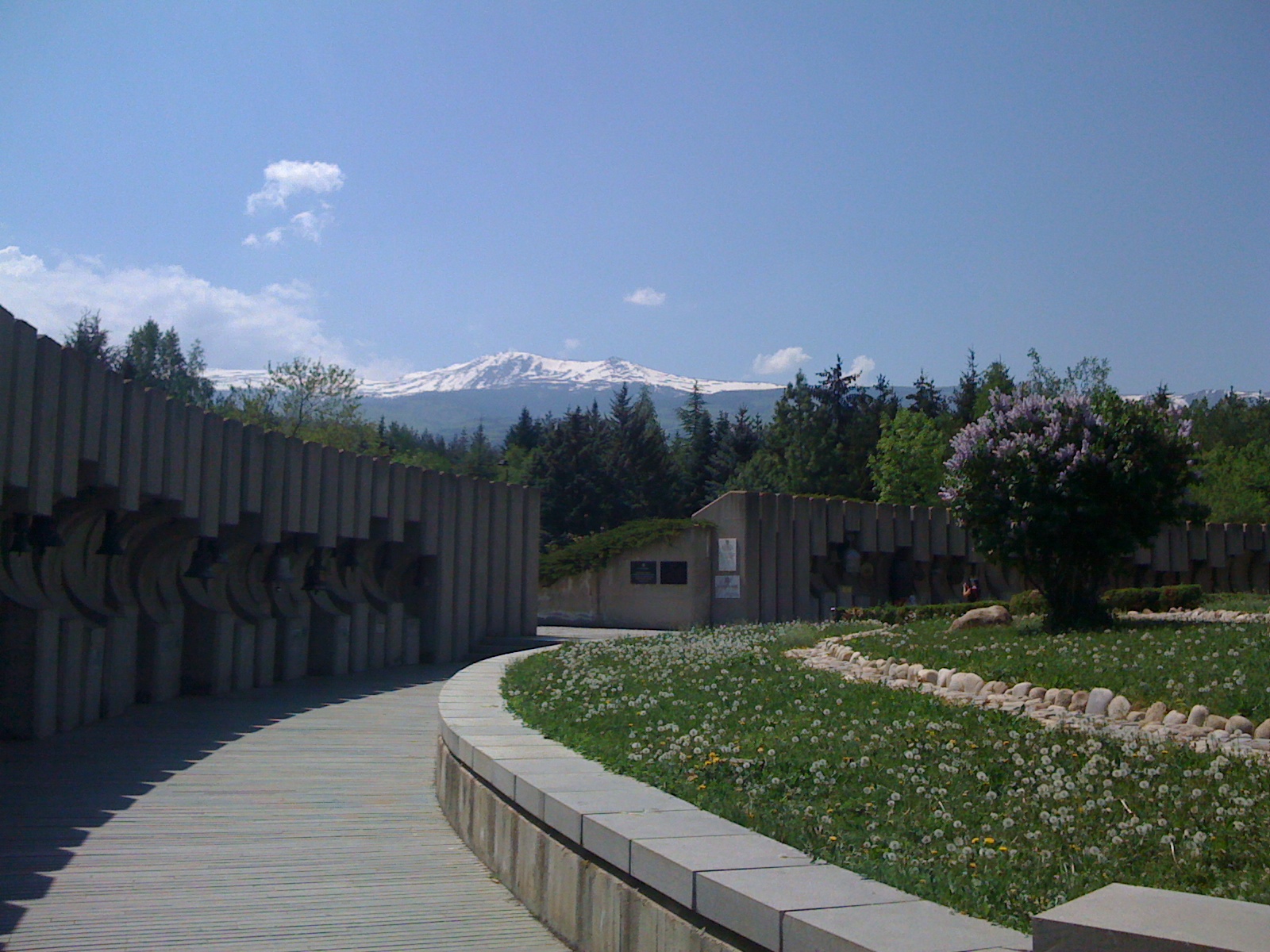
On May 1st Kiril and I went to Kambanite (The Bells) monument and park, dedicated to children all over the world. The monument was erected by Lyudmila Zhivkova, the daughter of the former Communist leader Todor Zhivkov, who was deposed in 1989. Zhivkova was a controversial figure but also a respected patron of the arts, and she established the monument through the "Banner of Peace" organization with support from UNESCO.


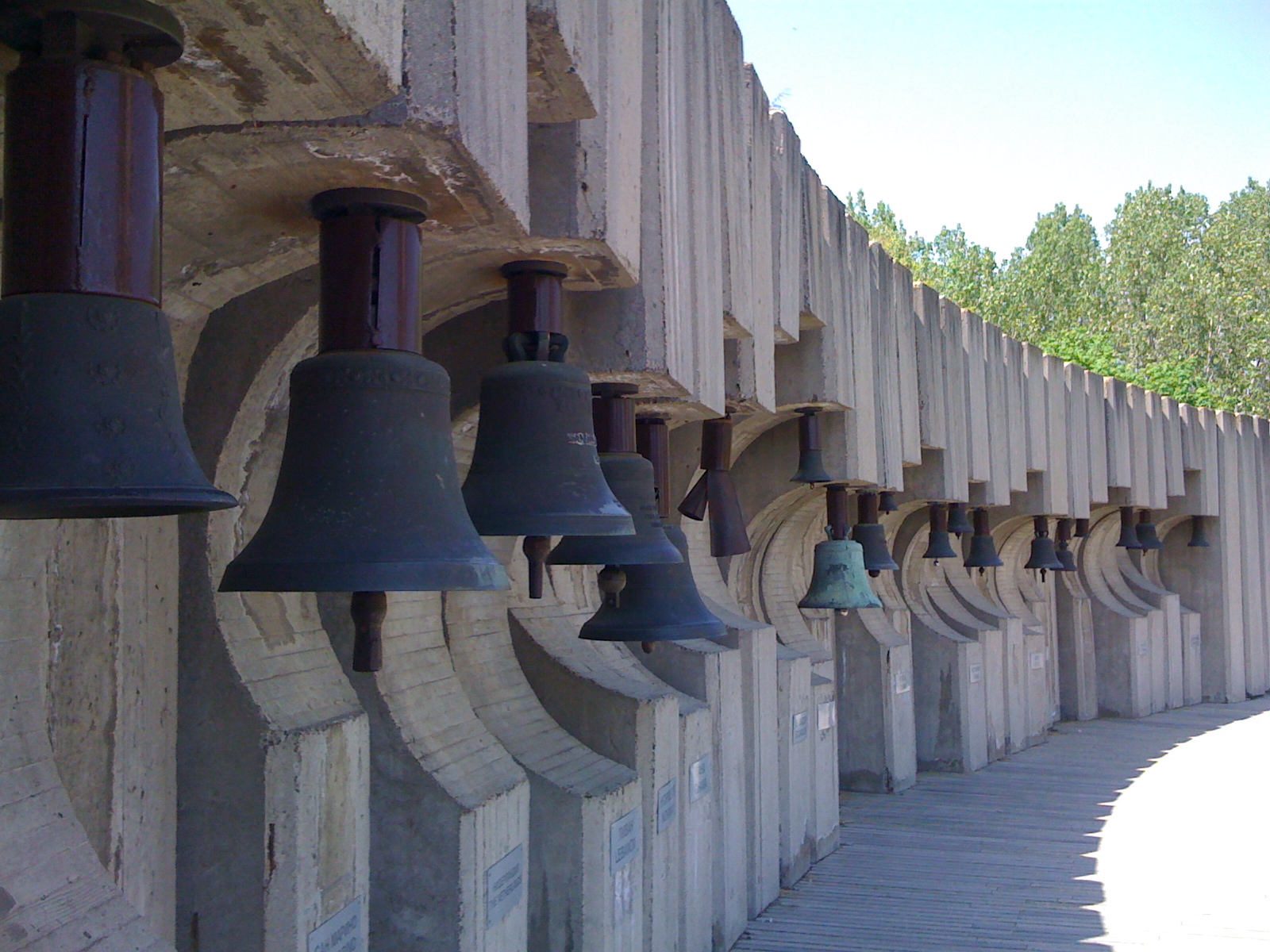
The park is made up of a circular pattern of bells donated by different countries built around a concrete tower holding seven more bells, meant to represent the seven continents. Having been created during the Communist period, the monument and park were neglected for many years until Zhivkova's daughter (also a fashion designer) started a campaign to restore it. Today many of the original bells are missing, but there are still signs of a bygone era there: a bell from Yugoslavia, Czechoslovakia, the USSR and both the German Deomocratic Republic and the Federal Republic of Germany. The are also bells from North and South Korea, Syria, Angola, China, Thailand, Nicaragua, Zimbabwe and many other countries around the globe. The United States' bell is quite small compared to Bulgaria's whopping 1300 kg one (commemorating 1300 years of Bulgarian history in 1981). But there are also some new additions, including bells donated by NATO and the Rotary club. I found Poland's bell, too...

  
On one side of the park there is a wall with plaques acknowledging the accomplishments of young Bulgarian athletes, artists and scientists. One of them is Ivet Lalova, Bulgaria' famous record-breaking sprinter. Read more about her in my post for International Women's Day last year.


These bells represent all the Bulgarian children living abroad. During the Communist period many families were forced to flee the country because of political differences. This was the case for my grandfather, who left Poland when it was invaded by Nazi Germany and could not return after the war when his country had joined the socialist bloc. As a result, there are many Bulgarian, Polish and other Eastern European families living abroad, especially in the United States. Unfortunately, there are still large numbers of young people who have to move abroad for economic opportunities. This is a growing concern within Bulgaria and many other European countries with struggling economies and limited options for employment.


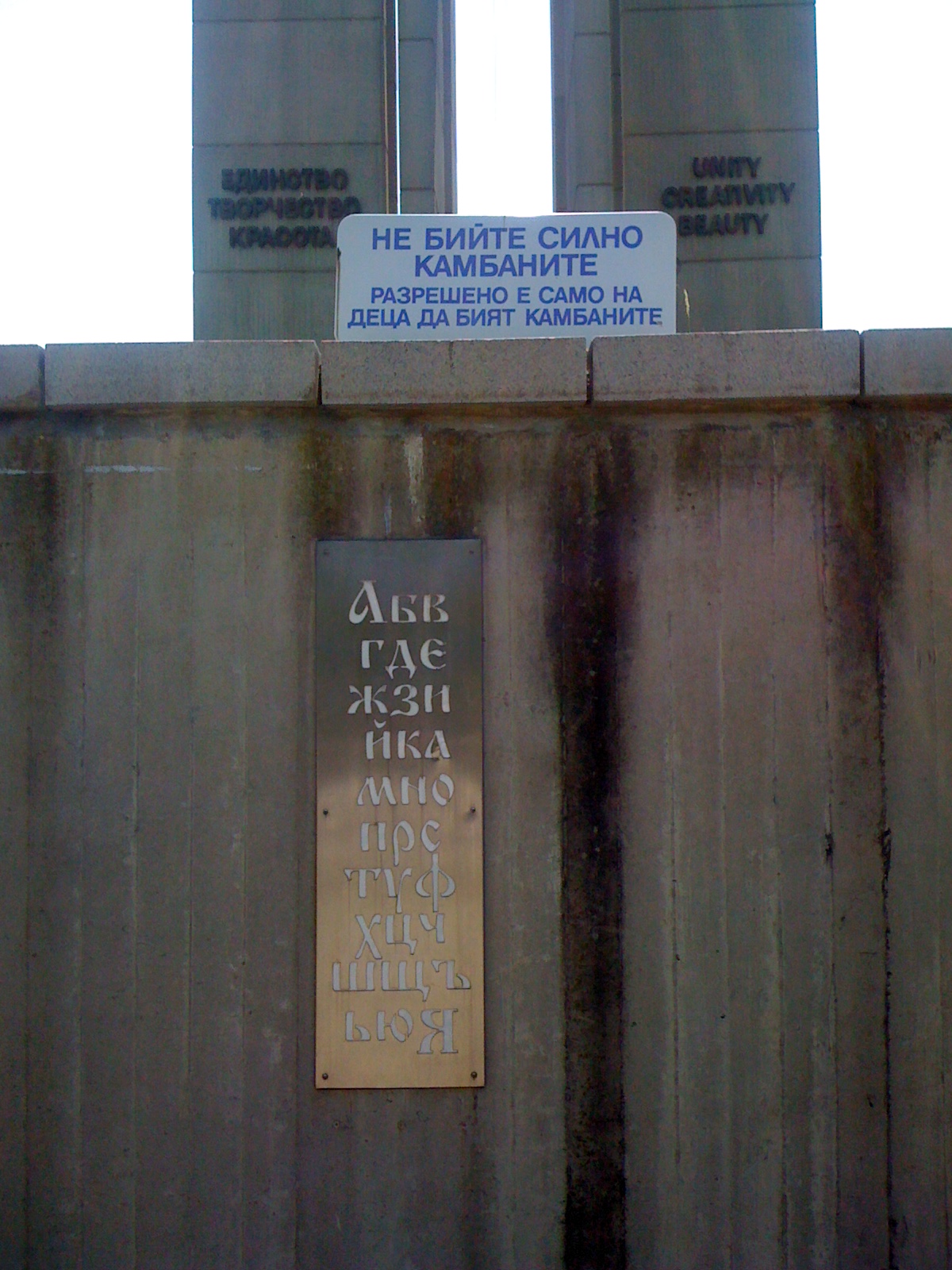
And finally, behind the central tower (which reads "Unity, Creativity, Beauty" in Bulgarian and English) there is a small sign asking visitors not to ring the bells loudly. It also states that only children are allowed to ring the bells. :)

Friday, April 5, 2013

Project Update and New Website!


*This post re-posted from the new "Learning Through Our Differences" website.
Picture
After a long trip from Sofia, Irena, Kalin and I arrived in Shumen very late the night before our training. With just four hours of sleep, we showed up bright and early at Nikola Ionkov Vaptsarov Foreign Language High School to meet our colleagues Kremena, Dimo and Tsveta. The Language School in Shumen is lucky to have such dedicated and enthusiastic teachers as them.
Picture
The day got off to a good start with all 26 participants actively engaged in the workshop. We started with some "getting to know you" activities and then moved onto more thought-provoking ones intended to break down social barriers and challenge traditional stereotypes. The 9th and 10th grade students were so enthusiastic, we didn't even notice the lack of sleep. Towards the end of the day, small groups began working on their "Community Action Plans," which are proposals addressing local problems like pollution, library accessibility, disadvantaged children and out-of-date athletic facilities. 
Picture
Once we had finished handing out certificates and taking our final photos, we received extremely positive feedback from both students and teachers. They were impressed with the project and excited to get started on their community action plans. We look forward to seeing the results of their hard work in the near future. A big, heartfelt thank you to everyone who attended!

Tuesday, January 1, 2013

коледа в българия (Christmas in Bulgaria)

This year I stayed in Sofia for the winter holidays. We have two weeks off from school (yay!) and, lucky for me, I got to spend Christmas with my Bulgarian family. Kiril's folks are absolutely amazing and have welcomed me into their lives in every way.

For Christmas Eve (Budni Vecher in Bulgarian) we arrived early to help his mother, Mimi, prepare the meal. This mostly entailed making two large banitsas (homemade layered pastry filled with cheese and eggs) with fortunes wrapped in foil inside. These fortunes are a very special part of the tradition, as they tell you what kind of luck you will have in the coming tear. Kiril and I also made desserts ahead of time, which was my American contribution to the meal. We made one of my holiday favorites, peanut brittle, and toffee-nut blondies, which were a big hit.

In the Bulgarian Orthodox tradition, very much like the Catholic one I grew up with, Christmas Eve is the bigger event and is always spent with the family. Unlike the Christmases I know from my childhood, however, in Bulgaria the meal is always vegetarian. There must also be an odd number of dishes on the table, and at least 7. I think we had 11 dishes total (more dishes are supposed to bring more good luck). Usually, the dishes are fairly simple with a few traditional meatless favorites making an appearance. We ate stuffed peppers with sultanas, lutenitsa (roasted red pepper spread), fresh sheep and goat cheese, banitsa, pickled vegetables, dried fruits and nuts, and a special bread called pogacha which Kiril's brother Kalin prepared. The bread also had fortunes inside, as well as a hidden coin. When the meal begins, the oldest member of the household breaks the bread and gives it to the youngest member. And of course, the meal wouldn't be complete without a glass of delicious homemade wine.

From left to right: Kiril, me, Mimi and Kalin

On Christmas day we went over to Kiril's father's apartment for lunch. He had prepared a very hearty dish called kapama, which is made in a big clay pot and slow-cooked for at least 8 hours. Inside of the pot were layers of sauerkraut, pork, beef, chicken, two kinds of sausage, red wine, bay leaves and other seasonings. We ate this with another big pogacha, more cheese and a dried sausage called lukanka. I was the person to find the coin in the bread that time, so I should be very lucky this year. After two days of eating so much delicious food (and drinking spectacular homemade wine), I was exhausted! The rest of the week was rather a blur, and I'm happy to report that I've caught up on some very much-needed rest and relaxation. 

Photos I found online of the food- this is pogacha (bread)

And kapama, cooked in a clay pot

Tuesday, November 27, 2012

Why, hello there.

Yikes! I promise that I am still here and have not gotten into any serious trouble. The last few months have been really busy...

In September I started a new job- yay! I'm officially a first grade English teacher. I also teach Science and Nature Studies/Geography, which is very fun. We get to make experiments and I like to pretend that I'm Miss Frizzle from The Magic Schoolbus (only with less awesome outfits, obviously).


The only problem about my job is that the school is really far away from where I live, so I travel for about an hour on two metro lines, a tram and a bus to get up to the mountain. The area is very beautiful, though, and right at the foot of Mt. Vitosha. This also makes it colder and snowier than the rest of the city. Oh, well.

For Halloween Kiril and I dressed up as a cowboy and 50s housewife, respectively, for a costume party here in Sofia. It was a lot of fun, and Kiril's homemade chocolate chip cookies were a big hit once again! People kept asking if I had made them, but alas I am not the baker of this relationship. I can whip up some great pancakes, though. ;)


Last week we spent Thanksgiving dinner with some friends here, mostly current Fulbrighters. I'm really happy that I get to meet the new researchers and English teachers every year, and that there are so many Americans who want to spend a year here in Bulgaria. A couple of prospective applicants have even emailed me through this blog, which is awesome! I guess that means I've done my job promoting how wonderful it is here.

In other news, I've been exercising more often and cooking a lot at home. It's getting colder now but we've had a relatively mild November compared with last year. October was downright hot. But winter has to arrive at some point... I've got my boots and heavy coats prepared anyway. Perhaps we'll be lucky and this won't be another record-breakingly cold winter.

Do skoro!

Tuesday, September 25, 2012

Bulgarian-American Partnerships

Just a few tidbits on current Bulgarian-American political and economic relations:

Touring the United States ahead of the upcoming UN Summit, Bulgarian President Rosen Plevneliev spoke about the Bulgarian economy on an American financial news program. Watch the interview here. The commentators didn't seem to know much about Bulgaria, except for rumors of high corruption, but President Plevneliev made plenty of references to recent statistics like Bulgaria's growing rate of GDP and decreasing budget-deficit in order to persuade them that the Bulgarian economy will pull out of the current slump soon.

I think that a lot of what he says is true- Bulgaria seems to be an attractive place to do business for investors (apart from the bureaucratic nightmare which accompanies nearly every official procedure) and there are many opportunities for growth in lots of sectors and industries.


In related news, the next U.S. Ambassador to Bulgaria, Marcie Ries, released a YouTube clip (see above) in anticipation of her arrival here in Sofia after a few weeks. It will be interesting to watch new developments unfold as the American Embassy changes staff- most Foreign Service Officers and other diplomats serve three year terms and right now there is a big overhaul in process. I had the chance to meet a few new staff members last week, and it was exciting to see so much enthusiasm to promote mutual understanding between our two countries. I wish Mrs. Ries and the rest of her new team the best of luck here in Bulgaria!

Friday, August 31, 2012

Settling In for Year Three!

About a month ago I moved into a new apartment, which isn't very far away from my old neighborhood in Sofia. I love my new place for a couple of reasons. First, it's well-connected by public transportation to the city center and other places of interest. I have a metro stop, two trams, several buses and a few marshrutki (also known as shared taxis) within easy walking distance. Second, the layout is great for having guests over because there is a separate room with a pull-out couch and the living room (which doubles as my bedroom) has a big sofa with comfy chairs and plenty of room to sit, chat and watch movies with friends. As you can see, I had a few friends over shortly after I moved in:


I hope to have many more gatherings like this one here. The only drawback is that there really isn't enough space for more than ten people here at a time. But I prefer more intimate settings, anyway. Third and most important is the amazing view I have overlooking Mount Vitosha and the sports high school next door. Why is it advantageous to be located next to a sports high school, you ask? What is a sports high school, you ask? It's a fantastic spot because with two large football fields directly behind the building, my windows look out onto green grass and open space rather than directly into other people's apartments. And a sports high school is another category of specialized secondary schools that have been established here in Bulgaria since the socialist period. It was thought that education should be highly specialized into different practical fields so that students could be more prepared to enter the workforce upon graduation. The foreign language schools where I used to work in both Pleven and Sofia are also legacies of that system.


I really can't emphasize the view enough. It's simply wonderful, especially at sunrise and sunset when the mountain is illuminated by pinkish or orangish light. From the eighth floor I also have a view of the southwestern corner of downtown- including the Military Hospital and the distinctively unappealing Hotel Rodina, one of the tallest buildings in the city at just 25 stories in height.


In other news, I'm still working on getting my project ready for implementation in the fall and waiting for the paperwork to be filed so I can really start canvassing schools. Ideally I'd like to work with one school in Sofia as well as one school outside of Sofia, mainly because there are a lot of differences between urban and rural (or less urbanized) regions in Bulgaria. This is largely due to high levels in unemployment resulting in dwindling small town populations. Many factories which once dotted the countryside have closed over the last twenty years, displacing hundreds of thousands of workers who have left in favor of higher wages in urban areas. Parallel to this trend is the so-called "brain drain" of educated professionals such as doctors, lawyers and educators who move abroad for better pay, resulting in local deficiencies in numerous sectors.

So my goals for this year are to see "Learning Through Our Differences" through to its completion (and reapply for future funding, as well as disseminating information about its results across the country) and to study more Bulgarian! I keep getting frustrated with my lack of vocabulary when talking with colleagues and friends, but it's really up to me to stick with it and push myself to learn more.

Sunday, August 19, 2012

New (and Old) Beginnings

This week I returned to the Fulbright International Summer Institute as an alumna to share my experiences with the new group of English Teaching Assistants. Now that I've been in Bulgaria for two years, I keep thinking back to those first couple of weeks in Bansko: adjusting to life in a new place, making wonderful new friends, getting confused all the time by the language (oh wait, that still happens to me every day), and most of all being excited to learn about everything around me. I'm still just as curious as ever about everything Bulgarian, but things seem to move more slowly now. I feel comfortable here in Sofia, and I never would have imagined two years ago that I would be getting ready for yet another year of teaching in Bulgaria.

Meeting the new group of ETAs was a great opportunity to make acquaintances (hopefully many of them will come visit throughout the year!) and also to reflect on my time as a Fulbright grantee. I'm happy to have been able to share some of the best and worst parts of my tenure as an English Teaching Assistant, and I hope that through networking and sharing new experiences, this year's grantees will be even more successful in their projects. By the way, the topic of my presentation was "lesson planning and resources." I know that Maria promised to email all the presentation to the FISI group, but I wanted to also publish it here in case anyone else teaching English to high school students might be interested.

Fulbright ETA Orientation 2012

In the slideshow, I give a rough overview of what ETAs can do in the classroom, an example of a standard lesson plan, 12 activity plans and 9 links to helpful websites.

Now that I'm moving ahead and away from teaching high school, I wish the best of luck to anyone taking on the challenge of working with teens in the language classroom- especially the new ETAs working in Bulgarian foreign language schools. Have a wonderful school year!

Friday, August 3, 2012

Summer Update

A lot has happened in the past month or so. A lot of months have been like that over the last couple of years, in fact, but July 2012 was a particularly intense exception. I finished my last day as a Fulbright English Teaching Assistant at the end of June, attended the farewell party for U.S. Fulbrighters and Bulgarian Fulbrighters who are going to study in the States next year, and I left for Poland to visit my family in Warsaw for three weeks.

Staying with my relatives is always a relaxing experience (lots of reading, picnics and swimming in the river by their summer cottage), and once again I took a trip with my cousin to a new destination in Poland. Last year it was the Baltic coastal city of Gdansk, but this time we headed south for the Tatra mountain resort town of Zakopane. While there I managed to check my email only rarely, but I did receive some startling and exciting news about my project, ""Learning Through Our Differences" (working title). Several months ago I applied for a grant from the Open Society Institute, who agreed to fund my project!!! So I'm working hard on that (more updates to come).

I hope that everyone is having a sunny and restful summer! 

Sunday, June 10, 2012

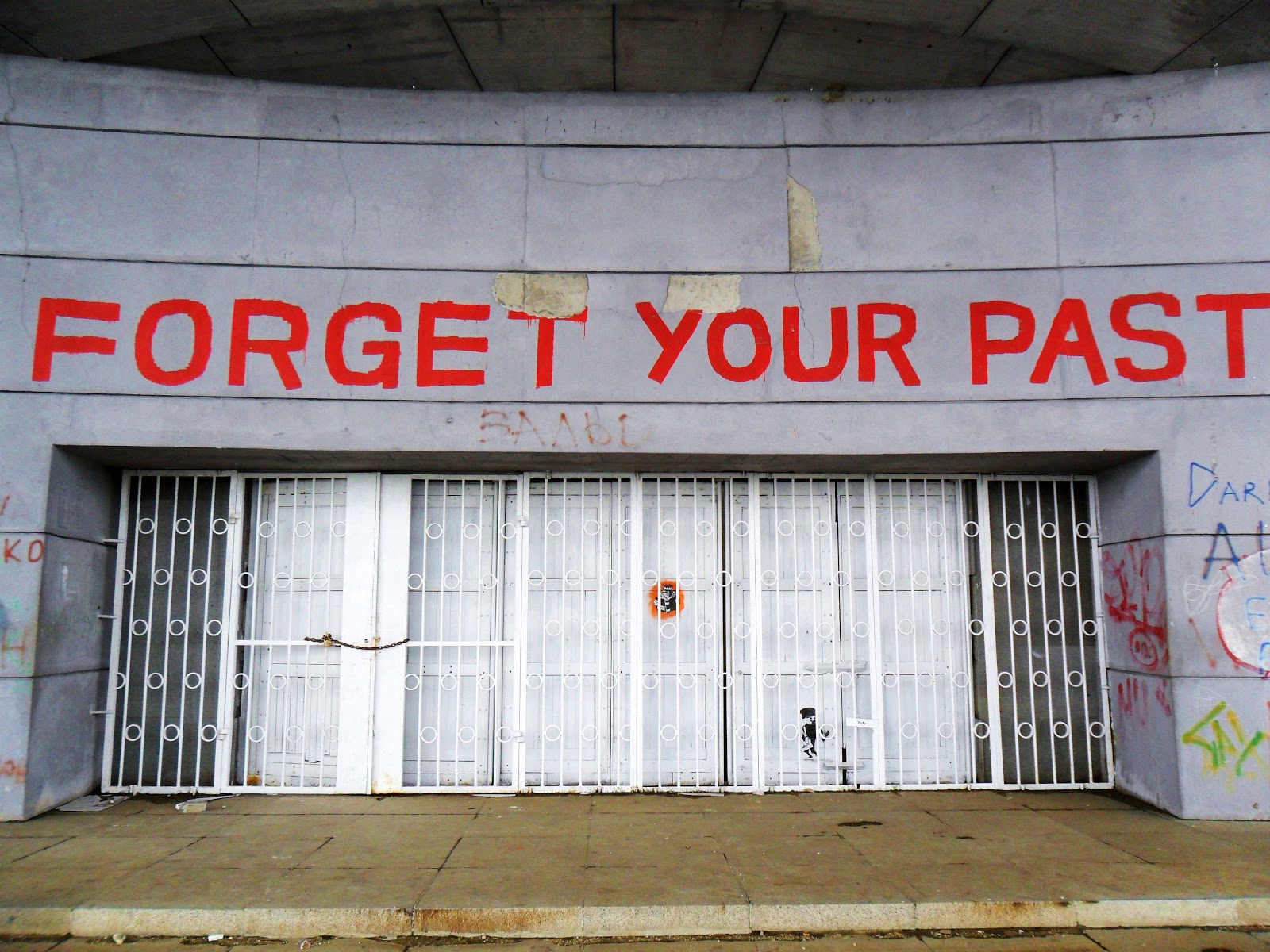
Forget Your Past

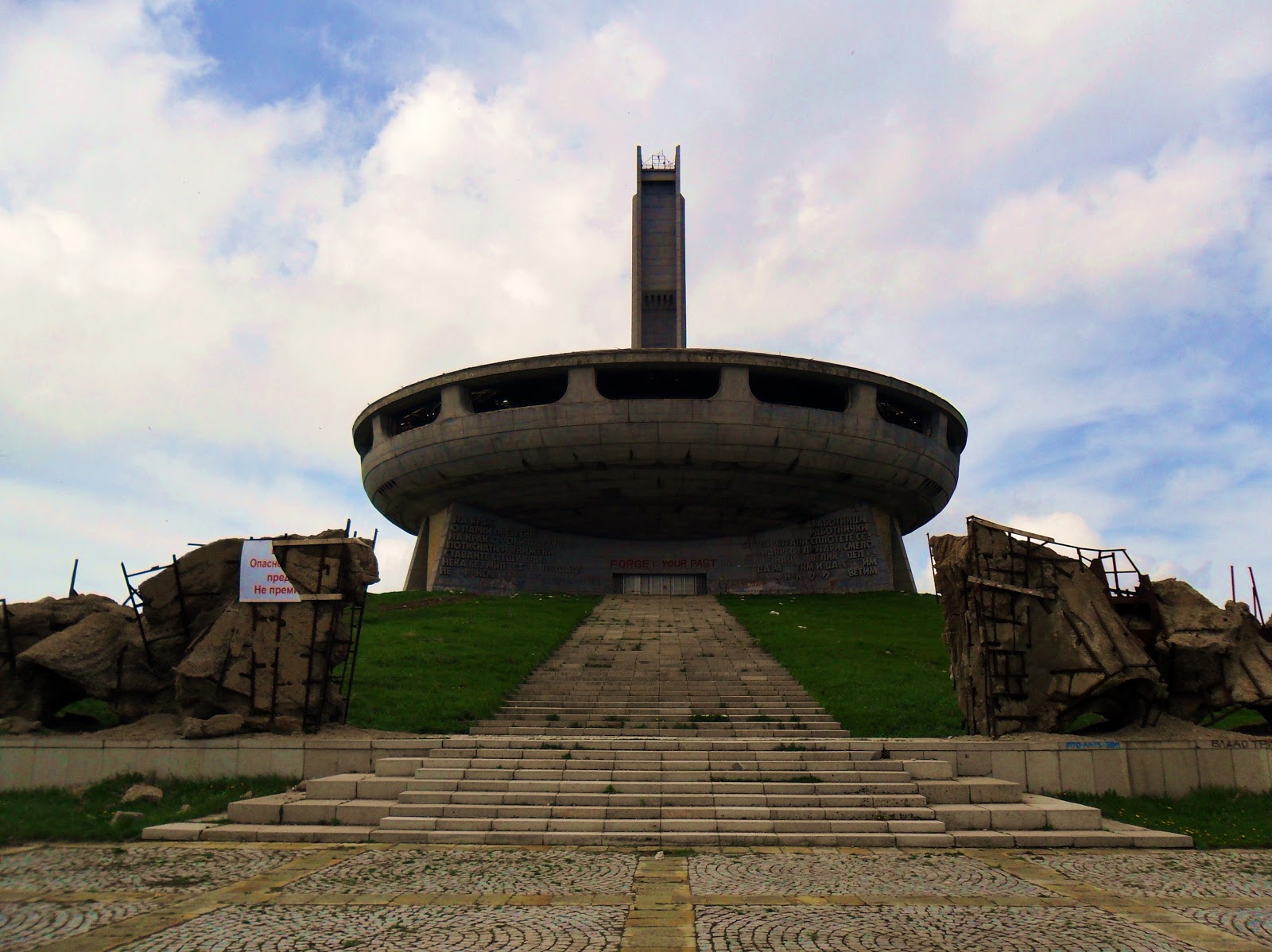
On our recent road trip through Central Bulgaria, Kiril, Laura, Sydney and I stopped off at what has become a popular off-beat tourist attraction: the space-like Bozludja monument near Shipka. This monument, built in 1981 to commemorate the founding of Bulgaria's communist party a century earlier, was once a proud symbol of the ruling government. Today, it sits crumbling atop the windy mountain where it was built over thirty years ago, and is very likely to fall apart completely if nobody steps in to preserve the structure.


Up until about a month ago, visitors could (illegally) enter the building because although there was a sign warning that the structure was unsafe, there was no lock on the gate. When we went there was a very sturdy lock and chain on the outside doors- comforting to me, because let's face it I am just not that adventurous. I'd rather not have pieces of ceiling tiles falling onto my head or breathe in the toxic asbestos that surely insulates the walls. Anyways, the building itself isn't very interesting, except that it looks like a giant spaceship perched on top of a hill. There's even a tail section with the socialist red star painted on either side. All of the letters on the outside are falling away, the roof is leaking and birds inhabit the upper floors. There is some graffiti scattered around the sides, but it's mostly just poorly drawn scribbles, with a few exceptions.


This message (intriguingly written in English- begs the question of who actually put it there) proclaims one current attitude towards the recent past. Or maybe it's supposed to challenge the complacency with which many choose to forget painful, although important, memories. One thing is certain: this structure has been forgotten by those in charge of its maintenance. Even the attempts to bar access are laughable at best- besides the aforementioned door lock, the only other effort to prevent people from visiting the monument is a road block with a warning sign. Taking a closer look, however, one sees the tire tracks where many cars have simply gone around the road block, onto the grass and back on the road again.


Whatever the future may hold for Buzludja, it is definitely a distinctive landmark for Bulgaria in more ways than one. If it wasn't for its remote location, I'd say it would make an excellent extension of the Sofia Museum of Socialist Art. For now, it's just another roadside attraction, although quite far off the beaten track.

Hiking Mt. Vitosha- Kamen Del

This year on May 1st, the international worker's holiday, I decided to get out of the city and go for a hike on Mt. Vitosha with Kiril and Elana. The mountain is one of the first things you notice when approaching the city, either with a car or by plane. It looms over the city, snow-capped in winter and vibrant green in summer, and has an almost magnetic pull for Sofia's outdoor enthusiasts. There are hundreds of trails and paths all around the mountain and and endless array of activities there, including horseback riding, skiing and soaking in the mineral-rich hot springs.


For hiking, there are lots of options. We chose to drive up to the hija (lodge) closest to Kamen Del, one of the most visible peaks from the city below. It's also one of the lower peaks- Aleko and Cherni Vruh are much higher up the mountain- but we didn't start early enough to summit either of those. On the way to Kamen Del you pass a natural rock formation called Zlatni Mostove (Golden Bridges) made up of huge boulders leftover from an ancient river. There are also waterfalls and caves scattered around the outskirts of the mountain.


Admittedly, the path we chose wasn't the most strenuous of hikes- there is a longer way to go starting from the Golden Bridges area, but we didn't have that much time. It took us about an hour or so to get from the lodge to the peak, and it was mostly a gradual climb; we moved through muddy forest, grassy field and rocky outcropping as we approached the peak. We were rewarded with a gorgeous view of the city below, and met two mountaineers who were attempting to summit every peak in Bulgaria, carrying the same flag around with them on every hike. 


Now that the weather is getting hotter and the snow has mostly melted from the other peaks, I hope we can go back to the mountain soon and explore its other beautiful sites. There is a very famous trail in the Rila Mountains that traverses across seven mountain lakes- aptly named the Seven Rila Lakes. They're supposed to be breathtaking, although more difficult to reach, and weather is a huge factor there because the wind and rain can really ruin a hiking trip. Hopefully in the summer it will be warm and dry enough up there to go for a daytrip. There are almost too many places I still need to visit here in Bulgaria!

Wednesday, April 25, 2012

"Learning through our Differences" project- part two

This post tackles some basic information about my side project, including its goals, my ongoing research, some favorite resources and an example of one very successful tolerance education program I participated in years ago.

Here's a quick list of my goals and objectives for the project:

1. To help make schools safer spaces for both students and teachers through dialogue and mutual understanding
2. To break down communication barriers, such as negative stereotypes, through hands-on activities that encourage critical examination of those barriers
3. To challenge students to be more self-reflective as well as empathetic, tolerant and understanding towards others
4. To develop a workshop curriculum, tailored specifically for a Bulgarian high school context, that can be further adapted for other contexts within the EU and the world
5. To help organize a network of facilitators prepared to carry out these workshops in schools across the country

A large part of my work so far has been researching the best methods and activities from professional organizations committed to tolerance education. There are tons of similar programs out there. Corporate diversity training, for example, often uses the same activities I've been researching to create more open and inclusive work environments. When I was in college I remember doing some of these activities for a seminar class in a Living-Learning Community Program. There are plenty of online resources available for teachers who want to incorporate tolerance and multicultural understanding into the classroom.

Some of my favorite websites:

- Multicultural Education Pavilion from EdChange (Paul C. Gorski)
- Diversity Learning Wiki from University of Wisconsin Whitewater (they also have a list of published resources here)
- Teaching Tolerance at the Southern Poverty Law Center

The only problem I've had with these is that most of their activities are very US-centric. So using them will involve some serious editing and adaptation for Bulgarian high school students to benefit from.

I gave a presentation last week to a group of high school principals, teachers, English Teaching Assistants and Fulbright staff on the project and I showed a segment of this documentary from Dutch television called "Over de Streep." This was the first time that Challenge Day, a San Francisco-based youth program, came to Europe and you can read more about it here. I actually attended Challenge Day when I was 13 at my middle school in Seattle. This program is particularly effective, and it's been around since 1987. I hope that what I can bring to Bulgarian schools with this project will also provoke discussion, awareness and understanding of differences in a similar way.

Tuesday, April 17, 2012

Honey, please!

Bulgarian honey is a big business for the small, family-run honey producers across the country. It's also extremely delicious, healthy and 100% organic and pesticide-free. Honey is a natural sweetener, antibiotic and immunity booster. The best places to buy honey are from the local producers in outdoor markets (there is at least one of these in every Bulgarian town). When I lived in Pleven I used to buy honey from the Iliev family beekeepers, and enjoyed learning about the health benefits of honey from one of the owners. I even brought home some samples of different types of honey to share with family and friends over the holidays.

Here in Sofia there are lots of markets where you can buy honey, and plenty of shops selling it along with other honey-related products (natural soaps, wax candles, tinctures, etc.). You can find pretty decent honey at the grocery store, but this removes the added experience of meeting the producer. A more interactive option just arrived this week: the "Week of Honey" exhibition. I happened to be passing by the Central Baths on my way home from work when I noticed the white tents and different vendors selling all kinds of honey products. There were lots of different types on offer: linden, lavender and herbal bouquet varieties to name but a few. I bought my honey this time from beekeepers in Razgrad, in the northeastern part of the country. I had the option of buying the clarified version or the raw, unfiltered kind that looks solid and milky rather than syrupy. I decided to go with the advice of the vendor and bought the crystallized raw one, and it is certainly yummy! The "Week of Honey" is also happening in 9 other places around Bulgaria, through this Saturday.


Sofia's "Week of Honey" Exhibition at the Central Baths (photo credits).

Friday, April 13, 2012

Orthodox Easter in Bulgaria

Bulgarians are getting ready to celebrate Easter this Sunday. While much of the Western world follows the Gregorian calendar, the Bulgarian Orthodox Church (along with most Orthodox Christian churches) goes by the Julian calendar to determine the date of Easter. However, Bulgarians do celebrate Christmas on December 25th as many Roman Catholic and Protestant followers do, unlike followers of the Russian Orthodox faith who celebrate it two weeks later on January 7th. The date of Christmas never changes; Easter changes every year. Last year Orthodox Easter fell on the same date as Catholic Easter, but this year it's happening one week later- hence the lateness of this post!


Yesterday Kiril and I painted Easter eggs, an important tradition which reportedly dates back to the time of Christ's death and resurrection. You're not allowed to dye eggs on Good Friday (or "Crucifixion Friday" in Bulgarian), so most people do this on either the Thursday or Saturday preceding Easter Sunday. The first egg is always red, which symbolizes health, and is left as an offering for the house. Many families keep this red egg stored somewhere for the whole year, until it is replaced by the next year's egg. Sounds a little smelly to me. One of my students told me that there is an additional tradition where you crack open the old egg and if it's still intact, this is an omen of good luck for the household.


We painted 8 eggs, a random number but that's because I forgot that I already had two in my fridge when we went out to buy half a dozen eggs yesterday. For some of them we mixed colors together and tried to use something called "crystal powder" that makes the eggs looks like there are little crystals all over them. I don't think we followed the directions very well for those ones, but the rest turned out great. On Sunday we get to play a game with them, which is another Bulgarian tradition.

The game goes something like this: each player holds an egg and knocks it against the other player's egg twice- first on the pointy end and then on the rounder end. The player whose egg survives this test is the winner, although I'm not sure what the prize is. If we were in the States, it would probably be a chocolate bunny or maybe a marshmallow shaped like a chick. But sadly, those are not really traditional here. 

Tuesday, April 10, 2012

"Spring Fatigue"

I've been feeling a little under the weather the last several days, and incredibly tired. Normally, I love sleeping in on the weekend (usually after staying up really late watching movies, though) but lately I can't seem to muster the energy I normally have, even with ten hours of sleep. Apparently this tiredness might be attributed to something called "spring fatigue" (in Bulgarian, пролетна умора) and is totally normal and very common at this time of year. But I've also developed a cough that sounds a little suspicious, which I shrugged off as a minor annoyance, but my boyfriend suggested that I start taking some vitamins and immunity-boosters just in case. 


By the way, this is Kiril. He's pretty wonderful. And the reason I'm pumping my system full of vitamin C, echinacea and various syrups (including propolis and ivy leaves). Although I was skeptical about the bee stuff, I have to say that after only two days I am feeling much better. It's nice to have someone taking care of you when you're sick!


We had a little argument the other day about American medicine vs. Bulgarian medicine. I had been taking some generic over-the-counter cough syrup that wasn't working, and he said that of course the Bulgarian kind would be better, because they only sell products here that actually work. I'm still not sure this is true, but I have definitely noticed an improvement over my Walgreens brand Dayquil substitute. In general, health care and medicines are far cheaper here than they would be in the States, which is sad to think about because I know there are lots of people back home who avoid going to the doctor to avoid the financial burden. In Bulgaria, although the quality of most public hospitals leaves much to be desired, at least you can get basic care for very little money. There are lots of differences between medical care here and in the U.S, which are too many to put into one post. I'm just happy that the more "natural remedies" seem to be working, at least for now.

Sunday, April 1, 2012

Daycare Center in Kazanluk

The last couple of weeks have been very busy- I passed the first stage of the Foreign Service Officer Test, which as you may remember, I also passed last year, but I didn't get to the final stage. I spent a lot more time this round on the essay questions. We'll see if my essays were good enough to pass the next step sometime in May.

Last weekend I made a short trip to Kazanluk, a small town located in the middle of the country at the base of the Balkan mountain range. Kazanluk is most famous for its rose festival every spring, but it's also home to a daycare center for children with disabilities supported by The Cedar Foundation, a non-governmental organization where I have been volunteering for the last several months. Cedar, based here in Sofia, aims to close Bulgaria's institutions for the disabled. These outdated institutions are largely underfunded, overcrowded and lacking basic resources to provide essential care for their residents. Organizations like The Cedar Foundation are working hard to transfer these residents into family-style group homes where they can receive more individual attention and, hopefully, become fully integrated into Bulgarian society. Cedar has already achieved remarkable success in this process through the closure of one such institution near Kyustendil.

The daycare center in Kazanluk is different because most of the children who go there live at home with their families. I was visiting with a friend who works in Cedar's Sofia office to observe the daycare facilities, meet the staff and children there. It was a wonderful experience. All of the staff have such positive energy and are constantly developing new activities for the children's therapy and education. After visiting a similar facility in the UK (on a staff training trip sponsored by Cedar), the daycare staff created a new sensory room where the children can have a more interactive therapy experience. The room has an "under the sea" theme and includes materials for children to touch, hear and see. Although I am not very knowledgeable about early childhood education or physiotherapy, I was impressed with this room.

I'm really happy that I was able to see the facility in Kazanluk because it puts my volunteer work into perspective: seeing the positive results of the foundation's efforts has motivated me even more to continue working with them. 

Saturday, March 17, 2012

Film review: "The State of Shock"


"A bittersweet comedy about capitalism and changing social values during the past 20 years, which have completely transformed the Eastern European countries. A story about losing and regaining the power of honesty." (Sofia International Film Festival website)


I was so impressed by this newest feature film by Andrej Košak (Slovenia). A collaborative effort between Bosnia and Herzegovina, Bulgaria, Macedonia, Serbia and Slovenia, the film centers around a Yugoslav metal worker who goes into a state of euphoric shock when he is awarded with a communal apartment at the first of May worker's celebration in 1986. He wakes up from this catatonic state ten years later to find his entire world changed: Yugoslavia no longer exists, capitalism has replaced the socialist system he loved so much and his wife has married his best friend. As he struggles to adapt to this new reality, the audience witnesses some of the violent economic and political changes taking place in the region today. Most of the people he meets think he is crazy because he lived in an institution for so long, but as the film draws to a close it appears that he may be the only sane person left. The script was touching, funny and thought-provoking. 


Because I attended the Bulgarian premiere at the Sofia International Film Festival, the director and leading actor (Martin Marion) were there to answer audience questions at the end. A testament to how much modern technology has permeated everyday life, Marion revealed how he first met Košak: a few years ago he read a comment the director had written on a mutual friend's blog and realized they were both living in Berlin. He contacted the blogger on Skype, got Košak's phone number, called him and they soon began working together on the film. Originally rejected in Slovenia, they finally won the support of several screenwriting organizations and local production companies to fund the project. The result is one of the best films I've seen in years, and I would recommend it to anyone interested in the recent past of the Balkans or Eastern European society in general.


You can watch the trailer here.