Showing posts with label travel. Show all posts

Sunday, June 23, 2013

Bulgarian Road Tripping with Dad

As you may be aware, I recently had to cancel a trip to Seattle (where I had hoped to catch up with my family and friends after a year and a half away) because of a serious medical condition. Although I have been out of the hospital for several weeks now and I am feeling much better, it's still dangerous for me to travel for long periods of time. That's why I won't be visiting my family for a while. :(

Dad's first Bulgarian meal

Luckily, my Dad was able to come visit me and also see Bulgaria for the first time. It was so great having him here, and really brightened my mood. During his two weeks here we were mostly at home, as I find myself getting tired easily and needing more rest. But we were also able to take him on a short trip around the country, our final destination being the Black Sea. With Kiril driving and Dad in the front seat, I was able to stretch out across the back seat and keep my leg elevated while on the road.

The southern highway to the Black Sea (Sofia-Burgas, or Thrakia Highway) passes close to Plovdiv, one of Bulgaria's oldest and largest cities. We spend a little time walking up to the Roman amphitheater and then having lunch in a former Dervish monastery that was constructed atop one of the old city's Roman walls (visible downstairs and from the patio outside).

Me and Dad in the center of Plovdiv

Our next stop was a Thracian temple and royal tomb, recently discovered near the village of Starosel. The temple, which dates back to the 4th century B.C., is the largest one found so far on the Balkan peninsula. A tour guide explained that the temple was used for worshiping the three dimensions of sky, earth and underworld. Three natural colors were painted in a repeating pattern around the walls and are still visible today. After that we stopped in nearby Hisarya, a town famous for its mineral water and Roman history. There are many resorts there where you can try out the healing properties of the famous water for yourself. It took us longer to find the southern gate of the late Roman wall, nicknamed "The Camels" than we spent looking at it, but it was getting very hot so we kept driving to our next destination.

In front of "The Camels" southern fortress wall in Hisarya

We spent the night in Veliko Turnovo, but on the way passed through the Shipka Pass. This landmark is an important part of Bulgaria's independence period, and a fierce battle was fought there between Bulgarian rebels and Ottoman soldiers. Last year I visited the monument and museum on top of the peak, but this time we just drove through on our way to Bulgaria's medieval capital. Our hotel was located right next to the Tsarevets fortress in the old town, which would have been perfect for watching an evening light show on the fortress walls. However, after a long day of driving and waiting a long time to eat, we had dinner in the hotel restaurant and went to bed early before starting another day of sightseeing.

The Holy Forty Martyrs Church in Veliko Turnovo

The next morning, after exploring the ramparts of Veliko Turnovo's medieval fortress walls and church (I opted to wait on a shady bench while Kiril and Dad made the hike), we drove down to the Holy Forty Martyrs Church on the banks of the Maritsa River. This church has an interesting history, and has also borne witness to some of Bulgaria's historical milestones. Tsar Kaloyan, one of Bulgaria's most legendary rulers, is buried in the church. Under Ottoman rule, the church was refashioned into a mosque, and many of its paintings and murals were destroyed. In 1908, Tsar Ferdinand declared the independence of the whole territory of Bulgaria inside the church. There is one remaining section of the church with original foundations and the rest has been restored. The newer interior is bright with white painted walls, which is uncommon for Bulgarian churches but has a very airy and calming feel.

Foundations of a pagan temple and first Christian Basilica at Pliska

After leaving Veliko Turnovo, we headed east towards Shumen and eventually got to Pliska, the capital of the first Bulgarian Empire from the year 681. It was founded by Khan Asparuh, who established the first Bulgarian Empire. Not a lot is left of the original buildings in the complex, as many of them were made from wood, but the stone foundations of a pagan temple, two basilicas, the royal palace, a bath house and several outlying buildings remain. A small museum describes the site's history and provides reconstructions of all the original structures.

On the Black Sea in Sozopol

Finally, we reached our end destination and checked into our hotel in Sozopol, just a half hour south of Burgas. Incidentally, we stayed at the same hotel as the first time I visited the Black Sea almost three years ago. I love staying in the old town because it is so charming and peaceful. And Sozopol is easily my favorite town on the coast, as it boasts small, charming cobblestone streets, two beaches, ancient walls and ongoing archaeological investigations. A recent one was the reported discovery of some relics of St. John the Baptist, which were probably transferred to the island of St. Ivan (St. John in English), just a kilometer from Sozopol's public marina, by a Christian monk in the 5th or 6th century. The relics are on display in the restored Church of Saints Kiril and Metodi, and the waterproof container likely used to transport them is in the regional historical museum. That museum also currently houses one vampire skeleton, part of another exciting and fascinating recent find near the town.

Medieval ruins of a monastery on the island of St. John the Baptist

We were able to visit the island by boat, and the roundtrip only cost us 40 leva, or roughly $9 per person. Our captain Dimitar told us that he has worked with the archaeologists working on the island, and that his boat actually transported the relics to the mainland. The island is small, and today mostly a nature preserve. We saw lots of young seagulls getting ready to take their first flight. A lighthouse built in the late 19th century still stands there, and the ruins of two churches can be viewed easily by tourists. The older one is where the relics of St. John were found, buried under the altar, in the summer of 2010.

Me and Kiril, on the boat ride back to Sozopol

We didn't make any more stops on our return trip to Sofia, so it was much faster, and Dad had just enough time to get his bags packed up before heading home to Seattle the next day. He was very happy at the end of our trip that he got to see so many parts of Bulgaria. But still, there are many more to see so I hope that he will come back again soon!

Friday, May 3, 2013

Kambanite: International Children's Monument and Park in Sofia


This was only a two-day workweek because of several holidays that got mashed together the first weekend in May: the 1st of May (for everyone outside the United States, this is labor day), the Bulgarian Orthodox Easter holidays (which happened to fall very late this year, about a month after the Roman Catholic ones) and St. George's Day (a religious feast day and national holiday, as St. George is the patron of Bulgaria's military). Anyway, all this celebrating means a six-day weekend and I have already done quite a bit of sightseeing in my time off.


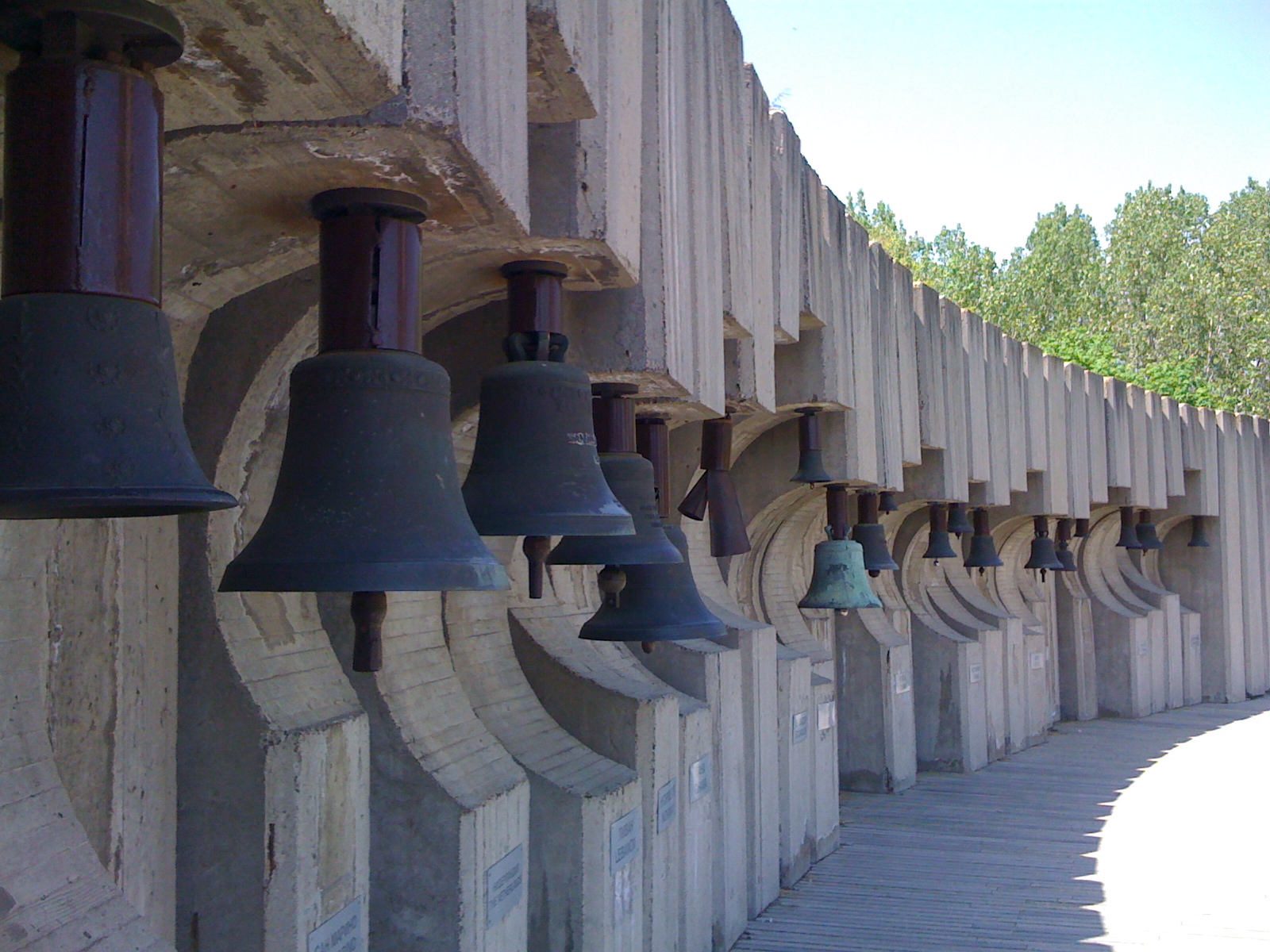
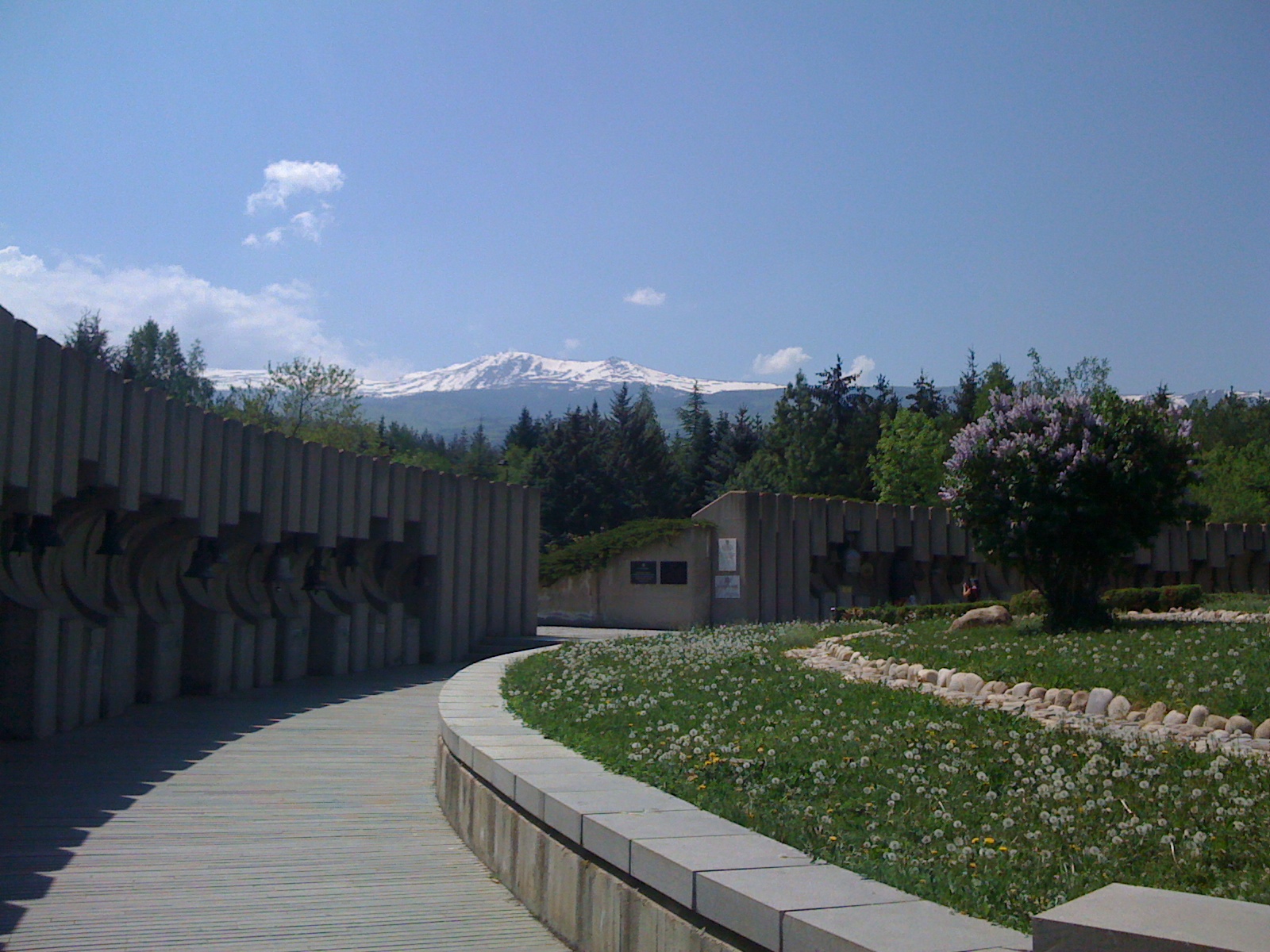
On May 1st Kiril and I went to Kambanite (The Bells) monument and park, dedicated to children all over the world. The monument was erected by Lyudmila Zhivkova, the daughter of the former Communist leader Todor Zhivkov, who was deposed in 1989. Zhivkova was a controversial figure but also a respected patron of the arts, and she established the monument through the "Banner of Peace" organization with support from UNESCO.


The park is made up of a circular pattern of bells donated by different countries built around a concrete tower holding seven more bells, meant to represent the seven continents. Having been created during the Communist period, the monument and park were neglected for many years until Zhivkova's daughter (also a fashion designer) started a campaign to restore it. Today many of the original bells are missing, but there are still signs of a bygone era there: a bell from Yugoslavia, Czechoslovakia, the USSR and both the German Deomocratic Republic and the Federal Republic of Germany. The are also bells from North and South Korea, Syria, Angola, China, Thailand, Nicaragua, Zimbabwe and many other countries around the globe. The United States' bell is quite small compared to Bulgaria's whopping 1300 kg one (commemorating 1300 years of Bulgarian history in 1981). But there are also some new additions, including bells donated by NATO and the Rotary club. I found Poland's bell, too...

  
On one side of the park there is a wall with plaques acknowledging the accomplishments of young Bulgarian athletes, artists and scientists. One of them is Ivet Lalova, Bulgaria' famous record-breaking sprinter. Read more about her in my post for International Women's Day last year.


These bells represent all the Bulgarian children living abroad. During the Communist period many families were forced to flee the country because of political differences. This was the case for my grandfather, who left Poland when it was invaded by Nazi Germany and could not return after the war when his country had joined the socialist bloc. As a result, there are many Bulgarian, Polish and other Eastern European families living abroad, especially in the United States. Unfortunately, there are still large numbers of young people who have to move abroad for economic opportunities. This is a growing concern within Bulgaria and many other European countries with struggling economies and limited options for employment.


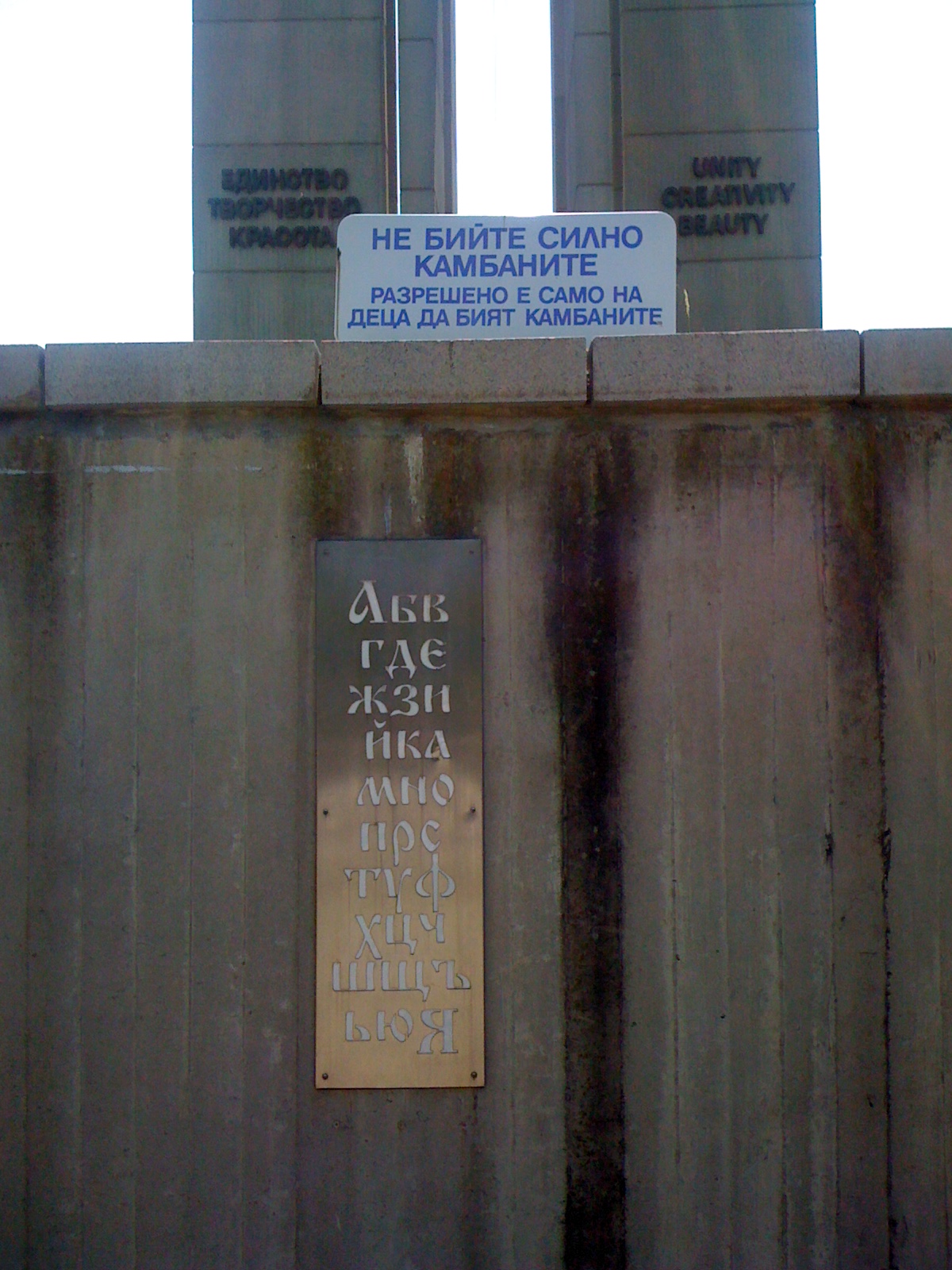
And finally, behind the central tower (which reads "Unity, Creativity, Beauty" in Bulgarian and English) there is a small sign asking visitors not to ring the bells loudly. It also states that only children are allowed to ring the bells. :)

Friday, April 5, 2013

Project Update and New Website!


*This post re-posted from the new "Learning Through Our Differences" website.
Picture
After a long trip from Sofia, Irena, Kalin and I arrived in Shumen very late the night before our training. With just four hours of sleep, we showed up bright and early at Nikola Ionkov Vaptsarov Foreign Language High School to meet our colleagues Kremena, Dimo and Tsveta. The Language School in Shumen is lucky to have such dedicated and enthusiastic teachers as them.
Picture
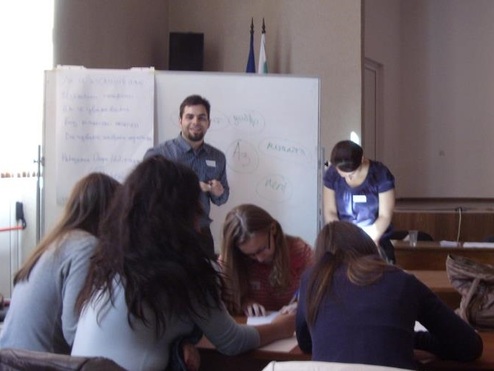
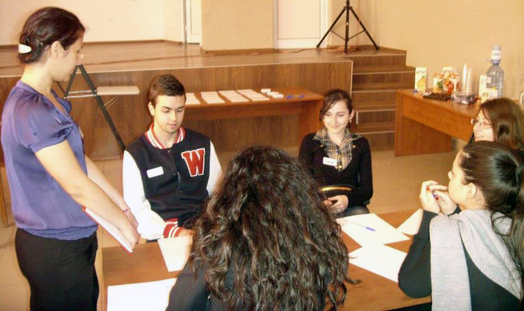
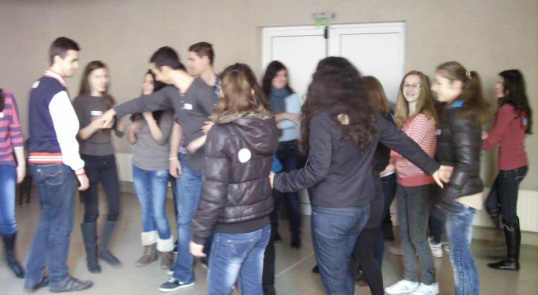
The day got off to a good start with all 26 participants actively engaged in the workshop. We started with some "getting to know you" activities and then moved onto more thought-provoking ones intended to break down social barriers and challenge traditional stereotypes. The 9th and 10th grade students were so enthusiastic, we didn't even notice the lack of sleep. Towards the end of the day, small groups began working on their "Community Action Plans," which are proposals addressing local problems like pollution, library accessibility, disadvantaged children and out-of-date athletic facilities. 
Picture
Once we had finished handing out certificates and taking our final photos, we received extremely positive feedback from both students and teachers. They were impressed with the project and excited to get started on their community action plans. We look forward to seeing the results of their hard work in the near future. A big, heartfelt thank you to everyone who attended!

Saturday, September 1, 2012

Hiking in the Polish Tatra Mountains

As I wrote in an earlier post, this summer I visited Zakopane with my cousin. Zakopane is a small touristy town nestled at the foot of the Polish Tatra Mountains, which are part of the Carpathian Range. It was a fun trip, and relaxing for the most part- except for the day when we got stuck on the mountain in a storm. That was a bummer. I should mention that I have a very low threshold for discomfort, and previous travel companions of mine (you know who you are) will confirm that I can get a bit *something* when things aren't going the way I expected. So when we ended up hiking for seven hours up some very steep slopes in the wind and rain, you can imagine the temper tantrum I wanted to throw. But everything turned out alright in the end. We found our way back down and made it into town for dinner after sunset (zurek- a delicious soup made from sour barley, sausage and boiled eggs).


Here's a view of the mountains from one of the city parks- the peak you can seen is named Giewont, and it's supposed to resemble a sleeping warrior. Can you see his head in the middle of the frame?


Going up the ski lifts to the peak where we started our hike. By the way, the line for the lift was huge so if you're going to Zakopane for hiking I'd recommend getting there early (before 9am) on a weekday if you can. When we got to the top if was too foggy to see much, but the view was still impressive.


When the rain started coming down- I wanted to take a photo at the Slovakian border. The whole time we were hiking my cell phone kept going in and out of range between Polish and Slovak phone services. Also, the look on my face sums up how I felt about most of the hiking adventure (not thrilled). But I think it was worth it for the experience, and spectacular views (once the fog lifted, of course).


This is the backside of Giewont from a neighboring peak. Now the warrior's head is on the left side!

In retrospect it probably would have been a good idea to check the hourly weather forecast before going up the mountain. It's really difficult to plan anything up there because at that altitude the conditions can change drastically within minutes. That being said, we both survived and it was a good bonding experience. My family in Poland are always trying to show me something different, and since there isn't much left that I haven't done in Warsaw it's nice to travel to new places, too. Next time, however, I'm going to suggest a less strenuous excursion.

There's Just Something About Mary

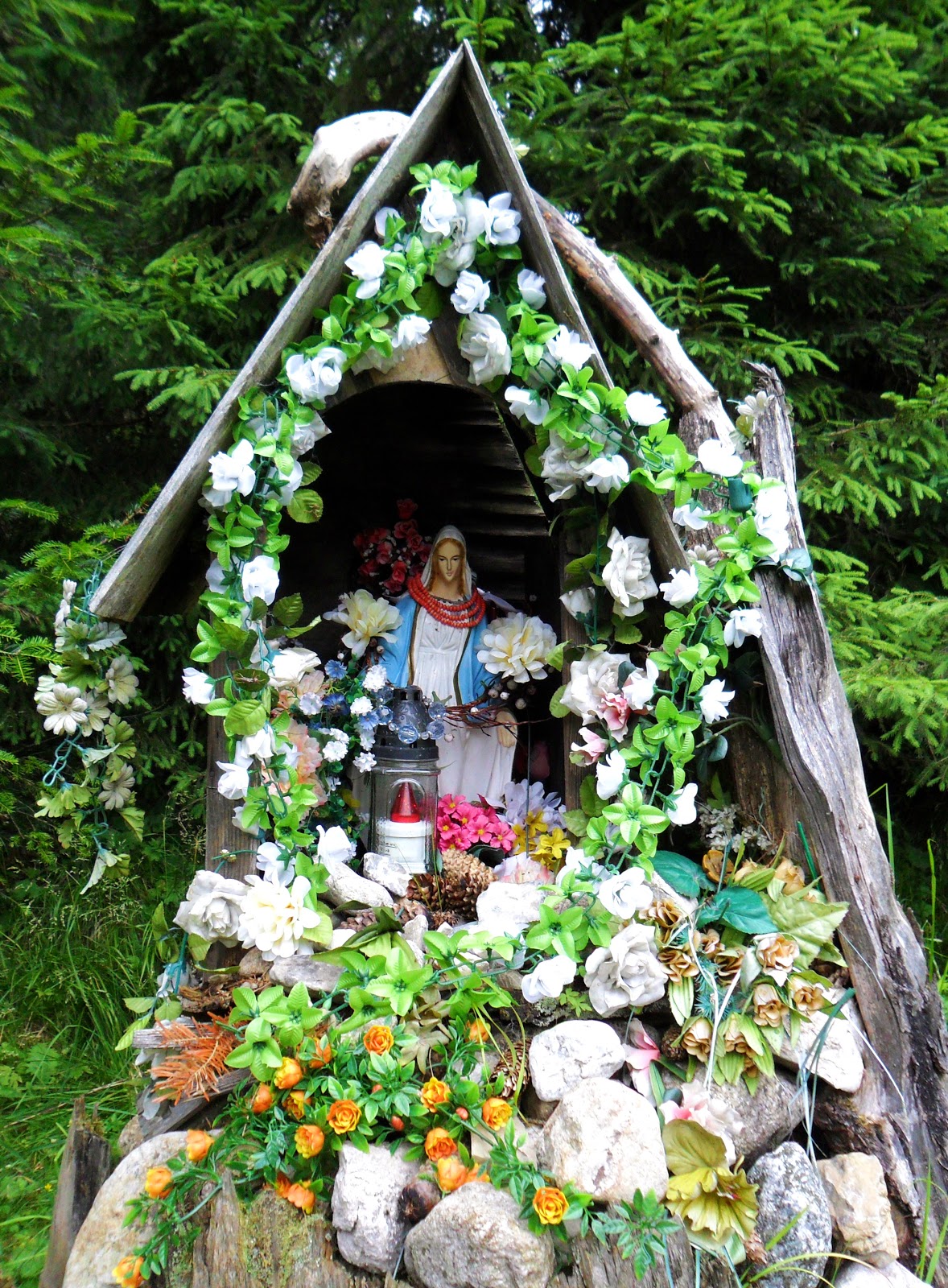
Walk through any town in Poland for ten minutes and you will find at least one of these iconic shrines to the Virgin Mary. A shrine or grotto built to venerate the Catholic Church's most worshiped saint can be found on many street corners, next to churches or even in national parks throughout the country.   


A grotto next to a small river in the Chocholuw Valley nearby the Tatra Mountains resort town of Zakopane.


This one is located in what looks like an abandoned lot on one of the main streets leading to the bus station in Zakopane. Southern Poland is considered to be more deeply religious than the north, and the town even has a chapel financed and built by local citizens as an offering of thanksgiving when the late Pope John Paul II survived an assassination attempt in 1981.


This alcove is on a street corner in the old Praga district of Warsaw, adjacent to a newly restored vodka factory-turned art facility that currently houses the Praga History Museum. I think that these shrines are quite beautiful, and wonder who takes the time to so carefully maintain them?

Sunday, August 26, 2012

Searching for pre-war architecture in Warsaw

A little over a month ago I was in Warsaw visiting my relatives on my mother's side. I've been making pretty regular trips to Poland over the last several years, at least since I've been living in Eastern Europe. I wrote about my visits during my first year as an ETA in Pleven, again that summer as well as during the fall of my second year. Over the course of these visits I have become more and more interested in my family history. And this time I got to do a little more research on putting together the puzzle pieces of that story.

My Polish grandfather was born in 1909 in a small town in the south called Częstochowa, most famous for its shrine to the Virgin Mary which is believed to have saved Poland from Swedish invasion in the 17th century. We don't know much about his life there because the family moved to Warsaw when he was still a young man. His father was an auto mechanic, I imagine a lucrative profession in the first decade of the 1900s. Back then Poland was still partitioned into three sections by the Prussian, Austro-Hungarian and Russian Empires. My great-grandfather used to travel to Russia often on business, but mysteriously disappeared on a trip there in 1914 at the onset of the First World War. His family never heard from him again and he was presumed dead, leaving his wife with four children to look after. After the war ended Poland was re-unified and became an independent country, but this was to be short-lived; in just over twenty years Nazi Germany would invade Poland and set off the beginning of World War II. At some point between the wars my grandfather's family moved to Warsaw, where they lived in an apartment on Puławska Street. I found the address on my great-grandmother's German identification document issued under Nazi occupation and while I was last in Warsaw my aunt and cousin took me to visit the building. We weren't even sure if it would still be there, but it was!


The exterior wasn't very remarkable (although it did have a fresh coat of paint, something lacking in most of the older Warsaw buildings outside of Old Town or New Town) and the ground floor on one side is currently occupied by a supermarket chain and a gym. One surprising detail was that there is a pharmacy which has been standing there since 1930. They even have a display case full of antique medical equipment. Going inside of the inner courtyard, however, was the biggest highlight. Tall, cream-colored walls surrounding curved balconies with wrought-iron railings and an open patio decorated with bright red geraniums awaited our discovery. Although I don't know the floor or apartment number where my family lived (or if the building has ever been remodeled or changed) it was still an exhilarating experience to stand there and imagine my grandfather walking into that building every day as a university student. 

After finishing his degree as a mechanical engineer at the Politechnical University, my grandfather enlisted in the air force. Just a few years later he would become one of thousands of Polish airmen who fled occupied Poland to the United Kingdom, where they were incorporated into the Royal Air Force as a separate Polish division. I recently came across military archives from his service there and found out that my grandfather was promoted twice and awarded the Polish silver cross medal of valor. Due to political reasons he was never able to return to Poland permanently after the war. I also know that he didn't like talking about what had happened; it must have been difficult leaving his life and family behind. His mother actually died on Victory Day in 1945 without knowing the fate of any of her four children (one son had been arrested as a prisoner of war and summarily executed, another had joined the Warsaw underground resistance army and her daughter was also working with the underground). There are so many stories from that turbulent time that have probably been forgotten, but as I put together details and facts that I come across it makes me feel like I'm making our family story more complete. 

On a related note, I also visited a former vodka factory that was recently converted into art galleries and loft space. It's located on the right bank of the Vistula River in the Praga District, one of the least damaged areas of the city after its destruction at the end of the war. You can still find old brick buildings left standing from the 18th and 19th centuries there, a rarity in a city that was made 90% rubble just over 60 years ago. The outside walls are covered in colorful graffiti, and inside the main building is a temporary exhibition of old photos from Praga before the war. The Museum of Praga is temporarily located in the old Koneser factory until the original building (formerly a Synagogue) reopens after restoration.  


Friday, August 3, 2012

Summer Update

A lot has happened in the past month or so. A lot of months have been like that over the last couple of years, in fact, but July 2012 was a particularly intense exception. I finished my last day as a Fulbright English Teaching Assistant at the end of June, attended the farewell party for U.S. Fulbrighters and Bulgarian Fulbrighters who are going to study in the States next year, and I left for Poland to visit my family in Warsaw for three weeks.

Staying with my relatives is always a relaxing experience (lots of reading, picnics and swimming in the river by their summer cottage), and once again I took a trip with my cousin to a new destination in Poland. Last year it was the Baltic coastal city of Gdansk, but this time we headed south for the Tatra mountain resort town of Zakopane. While there I managed to check my email only rarely, but I did receive some startling and exciting news about my project, ""Learning Through Our Differences" (working title). Several months ago I applied for a grant from the Open Society Institute, who agreed to fund my project!!! So I'm working hard on that (more updates to come).

I hope that everyone is having a sunny and restful summer! 

Sunday, June 10, 2012

Forget Your Past

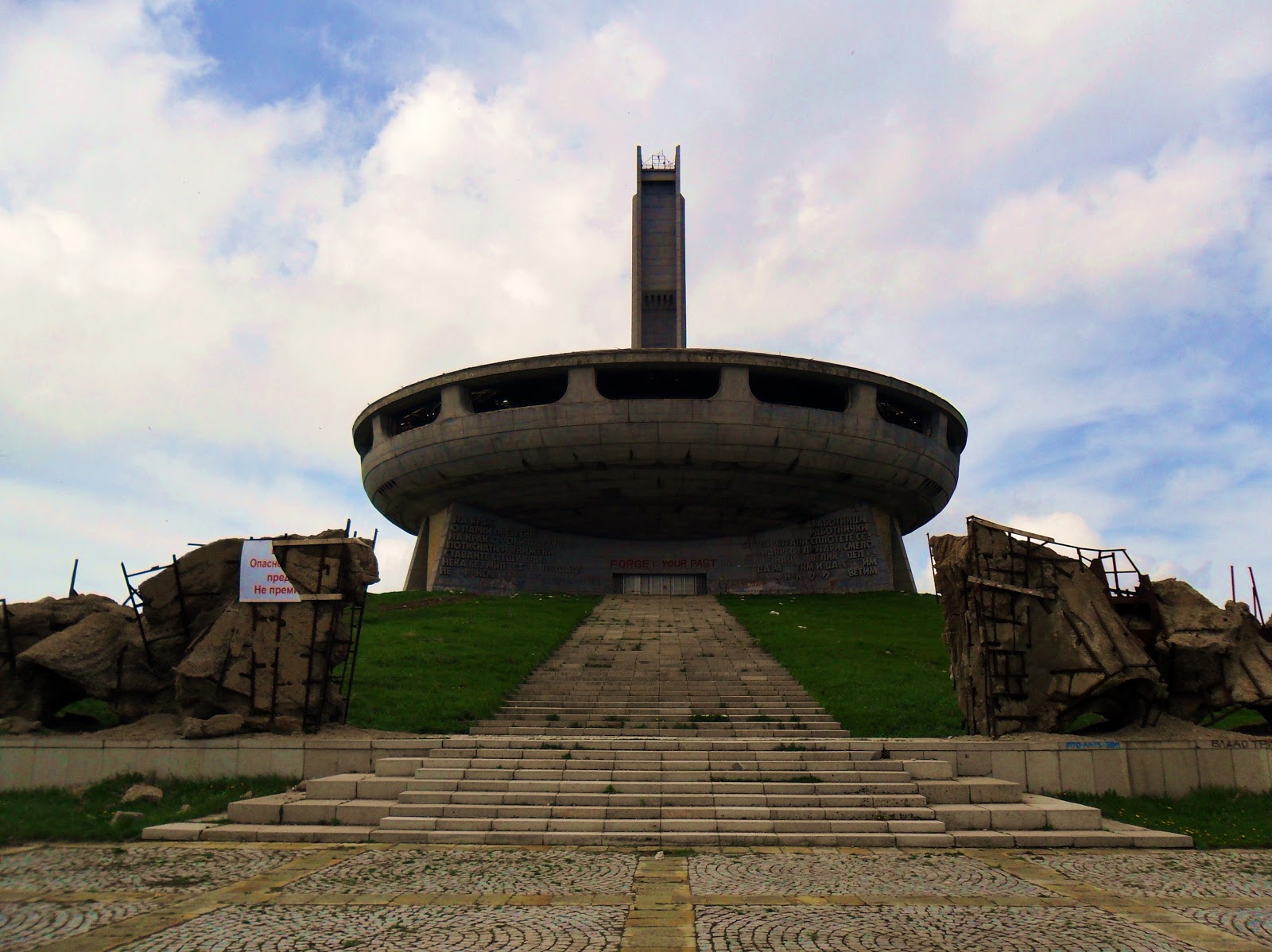
On our recent road trip through Central Bulgaria, Kiril, Laura, Sydney and I stopped off at what has become a popular off-beat tourist attraction: the space-like Bozludja monument near Shipka. This monument, built in 1981 to commemorate the founding of Bulgaria's communist party a century earlier, was once a proud symbol of the ruling government. Today, it sits crumbling atop the windy mountain where it was built over thirty years ago, and is very likely to fall apart completely if nobody steps in to preserve the structure.


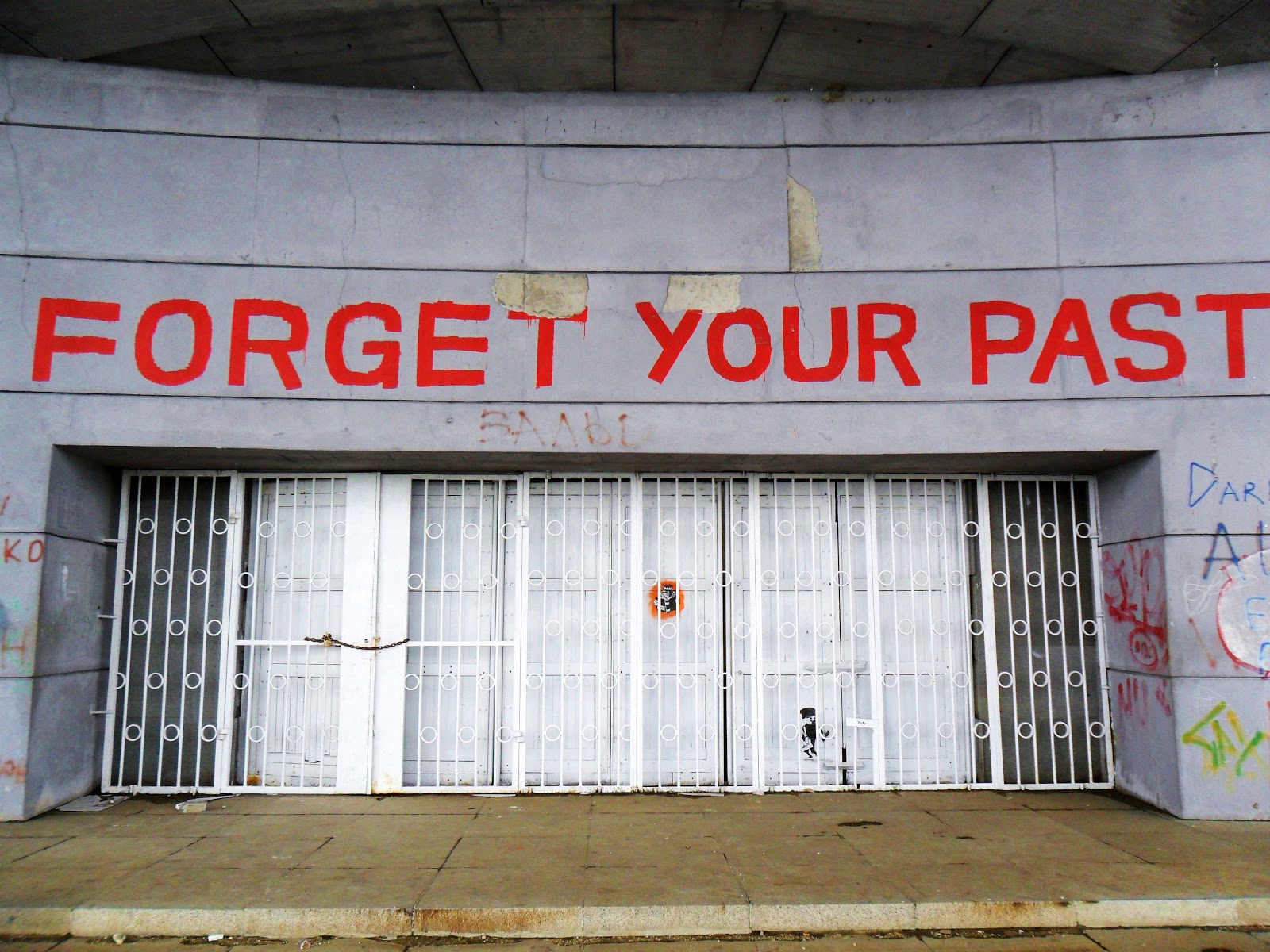
Up until about a month ago, visitors could (illegally) enter the building because although there was a sign warning that the structure was unsafe, there was no lock on the gate. When we went there was a very sturdy lock and chain on the outside doors- comforting to me, because let's face it I am just not that adventurous. I'd rather not have pieces of ceiling tiles falling onto my head or breathe in the toxic asbestos that surely insulates the walls. Anyways, the building itself isn't very interesting, except that it looks like a giant spaceship perched on top of a hill. There's even a tail section with the socialist red star painted on either side. All of the letters on the outside are falling away, the roof is leaking and birds inhabit the upper floors. There is some graffiti scattered around the sides, but it's mostly just poorly drawn scribbles, with a few exceptions.


This message (intriguingly written in English- begs the question of who actually put it there) proclaims one current attitude towards the recent past. Or maybe it's supposed to challenge the complacency with which many choose to forget painful, although important, memories. One thing is certain: this structure has been forgotten by those in charge of its maintenance. Even the attempts to bar access are laughable at best- besides the aforementioned door lock, the only other effort to prevent people from visiting the monument is a road block with a warning sign. Taking a closer look, however, one sees the tire tracks where many cars have simply gone around the road block, onto the grass and back on the road again.


Whatever the future may hold for Buzludja, it is definitely a distinctive landmark for Bulgaria in more ways than one. If it wasn't for its remote location, I'd say it would make an excellent extension of the Sofia Museum of Socialist Art. For now, it's just another roadside attraction, although quite far off the beaten track.

Monday, June 4, 2012

Earthquakes, Road Trips and Birthdays

The last several weeks have really flown by. One of my best friends from Seattle came to visit me here in Sofia, and we spent a few days traveling around the Bulgarian countryside in order to show her something more "authentic" than the busy atmosphere of the city. We also had a terrible shock when we were awakened one morning by a 5.8 magnitude earthquake and several smaller aftershocks. Growing up on the West Coast, we are both used to earthquakes happening every now and then. But usually when they happen at night, I sleep through the whole thing. This time it was a very shallow quake, and the epicenter was only 15 miles from Sofia. This made it nearly impossible to sleep through it (or fall asleep afterwards, for that matter).


More interesting than the earthquake was the road trip we took to the center of the country where villages and towns with architecture preserved from the 19th century sit nestled between the rolling green Stara Planina (Balkan) mountains. We stayed in Gabrovo, a town whose citizens are famous for their sense of humor and thriftiness and which is also conveniently located close to other interesting sites nearby. Only a few kilometers outside of town is the Etara museum complex, featuring an old mill, traditional shops, scarecrows, crafts and a very well-stocked sweet shop. We tried their specialty- kisses from Etara, two big white meringues filled with almond cream but decided against trying "Gabrovo chocolate," made out of prunes.

We also visited the monument at the Shipka pass- where a famous battle was fought during Bulgaria's war for independence from the Ottoman Empire. We drove up to the massive stone tower and climbed the steps, through the accompanying museum exhibits on the way up, to the top where we enjoyed an incredible view of the surrounding mountains. The clouds were gorgeous that day, and we could see all the way to our next destination, Bozludja- an abandoned communist party monument that sits on a hillside like a spacecraft waiting to return to the mothership (more about that in another post).


After the monument we visited a beautiful church in the town of Shipka before continuing along the mountain-hugging highway that connects the rose growing plain region with Sofia. Along the way we stopped in the town of Karlovo, one of two towns famous for its rose festival every June. I hope to go back there soon, if only to have lunch in the same place again. Prices are usually cheaper outside of Sofia (except for the Black Sea resorts) but not only was the food there cheap, it was also incredibly fresh and delicious. After stopping for lunch we continued on to Koprivshtitsa, another town famous for a battle fought (or at least started) there. Koprivshtitsa is also famous for its beautifully preserved old houses and idyllic setting in the mountains. We got there a bit later in the afternoon so there wasn't much going on, but we took some photos and began our return to Sofia through the windy mountain roads. I was ecstatic to see these horses grazing by the side of the highway, so we stopped there to take photos. I do love horses.


Side note- I turned 24 on May 23rd! I had a very relaxing day at the spa in Pancharevo (on a lake just outside of Sofia), hung out with some close friends and went to see a movie in the evening. It was extra nice because I had the whole week off school and didn't have to worry about work or deadlines or anything like that. Now we're in the final stretch of school, and while I'm sure it will just fly by as the last month has, June 29th seems too far away just now.

Saturday, May 5, 2012

May Day Weekend: Varna and Balchik

This week was shorter because of the four day vacation that extended through Tuesday, May 1st. May Day, or International Workers' Day, is officially celebrated in many countries around the world- but not the United States. From what I remember, this had something to do with a general fear of the popularity of socialism in the early 20th century. Americans celebrate Labor Day in early September.

But to get back to Bulgaria, we had a nice long weekend and I decided to take advantage of the gorgeous summery weather and visit my friend L in Varna, on the Black Sea.


It was a much-needed break. I am feeling a little overwhelmed by deadlines and the end of the school year quickly approaching with too many things to finish, so it was great to go to the beach and relax. I was joined by our friend A, who is also living in Sofia, which made the whole trip felt like one big extended sleepover party (fun!). We dipped our legs in the still-freezing water, worked on our tans/sunburns, enjoyed lots of delicious food (Varna has an amazing Thai restaurant and a sushi place, not to mention great seafood) and took a day trip to the botanical gardens in Balchik.


Here are L and A enjoying a beachfront meal of mussels, fried fish, calimari and beer.


The botanical gardens in Balchik are on the grounds of what used to be Romanian Queen Marie's residential palace. It was built during the interwar period when Southern Dobruja was under Romanian control. It is now part of Bulgaria, and the gardens are maintained by Sofia University. Fun fact: the queen's heart was buried in a special part of the gardens, but were transplanted to Bucharest after the region was returned to Bulgaria in 1940. 


One of the most distinguishing landmarks of the palace is this minaret, which looks like what you would find attached to a mosque. This building, however, was neither designed as a mosque, nor has it ever been used as one. Apparently Queen Marie had it built as a symbolic gesture to the architecture of the region. She also professed her belief in Baha'ism, which explains the coexistence of Islamic and Christian symbols in this part of the complex.

I returned to Sofia on Tuesday night feeling well-rested, but the rest of the week was a blur. I guess that happens when the working week is only three days long: you feel much more exhausted afterwards than you would normally! 

Sunday, April 1, 2012

Daycare Center in Kazanluk

The last couple of weeks have been very busy- I passed the first stage of the Foreign Service Officer Test, which as you may remember, I also passed last year, but I didn't get to the final stage. I spent a lot more time this round on the essay questions. We'll see if my essays were good enough to pass the next step sometime in May.

Last weekend I made a short trip to Kazanluk, a small town located in the middle of the country at the base of the Balkan mountain range. Kazanluk is most famous for its rose festival every spring, but it's also home to a daycare center for children with disabilities supported by The Cedar Foundation, a non-governmental organization where I have been volunteering for the last several months. Cedar, based here in Sofia, aims to close Bulgaria's institutions for the disabled. These outdated institutions are largely underfunded, overcrowded and lacking basic resources to provide essential care for their residents. Organizations like The Cedar Foundation are working hard to transfer these residents into family-style group homes where they can receive more individual attention and, hopefully, become fully integrated into Bulgarian society. Cedar has already achieved remarkable success in this process through the closure of one such institution near Kyustendil.

The daycare center in Kazanluk is different because most of the children who go there live at home with their families. I was visiting with a friend who works in Cedar's Sofia office to observe the daycare facilities, meet the staff and children there. It was a wonderful experience. All of the staff have such positive energy and are constantly developing new activities for the children's therapy and education. After visiting a similar facility in the UK (on a staff training trip sponsored by Cedar), the daycare staff created a new sensory room where the children can have a more interactive therapy experience. The room has an "under the sea" theme and includes materials for children to touch, hear and see. Although I am not very knowledgeable about early childhood education or physiotherapy, I was impressed with this room.

I'm really happy that I was able to see the facility in Kazanluk because it puts my volunteer work into perspective: seeing the positive results of the foundation's efforts has motivated me even more to continue working with them. 

Wednesday, March 21, 2012

Western Balkan Adventures

One really cool thing about living in Bulgaria is the proximity to so many other fascinating places. Obviously, I love to travel, and I have taken the opportunity to visit most of our neighbors in the Balkans. I still need to add Albania and Kosovo to the list, but we're getting there... Three years ago I spent a month backpacking in Slovenia, Croatia, Bosnia and Herzegovina, Montenegro and Serbia. Last year I visited Macedonia, Greece, Romania and Turkey.

If you're keeping track, you'll notice that I've actually been to every former Yugoslav country (again, not counting Kosovo). For whatever reason, I feel right at home there. I think it has something to do with the breathtaking landscapes, amazing food and kind-hearted people I've met in my travels. As a continuing theme along with my last post, I am going to share with you some highlights from my travels around this exciting and beautiful region.

Stop #1: Lake Bled, Slovenia
This gorgeous mountain lake is close enough to the capital, Ljublijana, to make it a day trip. We rented a paddle boat and ventured across the lake to see the medieval church built on a small island. As you can see, the scenery is gorgeous, with plenty of lush green forests all around. There are also lots of ducks and swans swimming around, and other water sports available to tourists. Ljubliana is probably a more exciting place to stay at night, though.

Stop #2: Split, Croatia
Croatia's Dalmatian coast is full of excellent beaches, charming towns and ancient historical remains. You can find all three around Split, right in the middle of the Adriatic coastline. We explored a Roman emperor's palace, took a ferry to the island of Hvar (with the most beautiful beach I've ever seen), sampled local sea-fare and walked through the botanical gardens (the big green hill, pictured). If you visit the big towns in Croatia, be prepared for lots of crowds, like any major European tourist destination. If I go back, and I hope that I will, I plan to visit some smaller towns and fishing villages in the north, along with the Elaphite islands near Dubrovnik.  

Stop #3: Mostar, Bosnia and Herzegovina
Mostar is a small town in the Herzegovina region, but its central feature- the old bridge- is an important symbol of cultural identity. Like all former Ottoman towns, Mostar's population was divided into separate living quarters but its groups carried out business and maintained friendly relations with one another. In general, the bridge separated the Christians and Muslims who lived on either side of it and served as a connection point between them. It was also an unfortunate casualty of the 1993 war, when it was completely destroyed. International efforts to restore this cultural property began in 2001, and the bridge was reopened in all its former glory in 2004 as a UNESCO World Heritage Site. One tradition that has remained over the years is the diving competition, where young men take the daring plunge into the cold water of the Neretva river below. 

Stop #4: Ostrog Monastery, Montenegro

I have a harrowing tale to go along with this photo. But first, let me begin with the church built into the face of a cliff. This is something I've seen in other parts of the region, namely in Bulgaria and Greece. Under Ottoman rule, many monks lived in remote, mountainous areas and built some impressive dwellings to keep up their hermetic lifestyles. To get there, you have to drive through winding roads and mountain passes, sometimes too narrow for more than one car to pass at a time. My friend Wade and I had rented a car to get there, but I ended up having to drive because it was a manual transmission and he could only drive automatic. I don't love driving, and hadn't expected to on this trip, but it was the only way we were going to get there so, after a few stalls along the way, we made the journey to the monastery. 

About halfway up the steep slope where it's located, I was making a sharp turn and forgot to change gears, which caused the car to stall and slowly creep towards the edge of a very high cliff. Pretty freaked out by now, I pulled the emergency break and then tried to re-position the car so we wouldn't fall to our deaths. At that moment, a group of burly men stepped out of a Jeep to assist us- or, rather, Wade. First asking if we spoke Russian, they interrogated him in broken English about why he, the man, wasn't driving. Sigh. Unfortunately in this case I was acting a bit helpless, but it never feels nice to be patronized. Taking the keys, one of our rescuers managed to turn the car around- facing down the hill. 
- "Wait," we protested, "we want to go up, not down."
- "No more drive like this." was their reply.

Defeated and car-less for the rest of the trek, we hiked the rest of the way up to the monastery, which took about 45 minutes. It was impressive, with sweeping views of the valley below. On the way back, we hopped back into the car and rolled along down the hill and back onto the highway towards our hotel. I really hope I never have to drive stick shift again.

Stop #5: Belgrade, Serbia
Belgrade, the grand capital city on two rivers, has plenty to offer in terms of history, cafe culture, nightlife and pristine parks. The old citadel, Kalmegdan, is surrounded by a beautifully manicured park and also houses the national military museum, which has some very interesting exhibits on the Balkan Wars. In the summer there are floating restaurants and bars that open up along the riverbanks where you can spend an evening dining and enjoying great music. 

The most unique part of Belgrade, in my opinion, is the House of Flowers, where the remains of Josip Broz Tito are kept within the grounds of the Museum of Yugoslav History. Just like the mausoleum of Bulgaria's first communist leader, Georgi Dimitrov, which used to stand across from the Gallery of Foreign Art in Sofia, the House of Flowers commemorates Yugoslavia's founding father who symbolized the ideals of socialism. Tito's tomb today serves either as a shrine for "Yugonostalgists" or simply an important part of recent history to be remembered by future generations. The mausoleum in Sofia was destroyed in 1999, and it's questionable whether or not its existence will be remembered in the future. 

There are so many other places I visited on that trip and many more I plan to see in the future. I hope that this post gave you a taste of what the countries in this region have to offer- a lot!

Saturday, January 14, 2012

David Bowie Nostalgia Rush


I love David Bowie. So does my family. I bought his Greatest Hits album years and years ago and we still listen to it on repeat in the car. Listening to it now reminds me of growing up in Seattle, singing in the car with my mom or riding the bus in high school with my walk-man at full volume (I'm still pretty much a late adopter to technology, though I have upgraded to an Ipod since then). I've been collecting his earlier albums, too, and I love some of the tracks you don't normally hear on the radio, like "Kooks" from Hunky Dory. One of my favorite directors- Wes Anderson- used a lot of his music on the soundtrack to The Life Aquatic with Steve Zissou (2004) as well as some cover versions of his songs by a Brazilian singer, Seu Jorge, who sang them in Portuguese. His cover of "Life on Mars" is incredibly beautiful. I've seen Bowie live in concert once. He came to Seattle for his (probably) final performance when I was 16 . He definitely hasn't gone on tour again since. My mom surprised me with tickets and him being my favorite singer EVER, I was very excited to go. It's still my favorite memory with my mother. She would always do cool stuff like that with me and my brother, and made a lot of our dreams a reality. That's how I was able to travel abroad for the first time when I went to El Salvador. While I was in Seattle over the holidays somehow this music and the memories it stirs up, combined with the familiar cityscapes we passed while driving around, really made me nostalgic and miss that place in a way I rarely feel. While I don't really identify with it anymore, there are so many parts of my life that are intertwined with my hometown and I know that wherever I go in the world, there is a place I can always go back to that pulls me in like gravity. It's a very comfortable feeling. 

Tuesday, November 15, 2011

Hot beer, gingerbread and unlikely encounters

More on my recent trip to Poland! The day before Halloween I traveled from Warsaw to Torun, one of the bigger and certainly more beautiful cities there, to visit a Bulgarian friend, V. She is currently living in a small village near Bydgoszcz (yeah, I can pronounce that) with the European Volunteer Service program. I've met EVS volunteers here in Bulgaria, too, and it sounds like a pretty cool program. It's basically a shorter-term European version of the Peace Corps, but all the volunteers are under 26. She works for an adult group home for people with disabilities, and loves her job. All the volunteers live together, and come from lots of different countries, so it's an excellent opportunity to make new friends, too. We decided to meet in Torun because it's halfway between Warsaw and Bydgoszcz.


While it definitely has all the tourist kitsch necessary to make it a major holiday destination, Torun seemed a lot more relaxed and less crowded than Krakow. It has gorgeous architecture, a beautiful location on the Vistula River and a rich history. Like Gdansk, it was once part of the Hanseatic League. It was also the birthplace of Nicolaus Copernicus, whose house is now a museum. Another famous attraction is Torun's gingerbread (or piernik in Polish). I loved wandering around the winding back-alleys and medieval ruins of the old town while scarfing down these delicious cookies. And, appropriate for the weather at this time of year, we also drank a lot of hot beer, which gets mixed with different spices and even comes in flavors like strawberry or raspberry. Needless to say we had a pretty great time.


I had some difficulty getting back to Warsaw because when I arrived at the train station in Torun I found out that the 15:30 train listed on the departures board not only didn't run that day, but no longer existed. So much for relying on printed schedules! In future I plan to always ask someone to make sure I know where I'm going (and when). So I took a later train that included an hour-long stopover in an even smaller town called Kutno. Since it was dark already and I only saw the train station, I don't know much about the place. I do know that the main building is currently undergoing repairs, because there was nothing open and passengers had to wait on the platforms for the trains rather than inside. That would have been fine if there was any information about the platform numbers for trains to Warsaw written in plain sight. So there I was, freezing my butt off at platform number one, hoping to find someone who could help me find my train before it left without me, when I was approached by two Catholic priests. That's pretty normal in Poland but the weird thing is that they were Americans. And, ironically, they asked me if I could help them find their train! After realizing that I was just as lost as they were, one of the priests found someone who spoke English and could point me in the right direction. My train came almost immediately after that, so I had to hurry, and I have no idea where they were from or what they were doing in Poland. But I'm glad they were there and I hope that they found their train platform, too. When I got home and told my aunt this story, she was delighted, saying that it just goes to show how lucky I am (we talk about this a lot, because I get lost a lot) to have been offered help by priests. Of course. This is Poland, after all.

Sunday, November 13, 2011

Women's Soccer and Alexander the Great

Since returning to Bulgaria I have done very little traveling compared with last year. And I think that's a great thing, because I am really enjoying myself here and exploring more of the city (and meeting new friends!). But I have managed to leave the country twice so far. A few weeks before I went to Poland I went on a road trip with Laura and three new friends to Macedonia. I had been to Skopje and Ohrid before, but this time we also stopped in Prilep, which is a few hours south of the capital, to watch a soccer game. Okay, so sports aren't really my thing, but I had a good time. We watched the women's national team play Italy for a European Championship League qualifying match. Much to my disappointment, Macedonia lost 0-9. It would have been nice for them to score at least one goal, but I think their players were a lot less experienced than the Italian team, who played excellently. Prilep is a small but charming town. There's a large covered market, lots of beautiful 19th-century buildings and a lovely clock tower in the center. Later we found out that it's also home to the only Thai restaurant in the country (and maybe even the region) so a return trip might be in order sometime soon.


After exploring the center we drove to Skopje where we had a very nice Italian dinner and went to a bar called Damar in the old town. It was probably the single best bar I've been to in Bulgaria or Macedonia. The interior was all exposed brick and rough wooden rafters, the drinks were cheap, there was NO SMOKING inside, and best of all, it was gay-friendly! I think it was the only bar like it in Skopje, and it's hard to think of a similar comparison in Sofia, it it exists. We chatted with some locals and stayed until closing (which was unfortunately quite early, because bars in Skopje don't stay open very late). There is also a law which restricts the sale of alcohol after 7PM in Macedonia, which is very weird. So maybe the nightlife scene in Skopje isn't all that exciting, but I think that this bar really is a unique one for this part of Europe, and I would definitely go back.


Skopje's newest tourist attraction is a giant statue of Alexander the Great, who is this small country's claim to fame (and one reason behind its problematic relationship with Greece). Macedonia wants to join the European Union, but Greece has vetoed its membership application over a name dispute. Macedonia is an historical term for a much larger region that includes parts of Albania, Greece, Serbia, Kosovo, Bulgaria and Macedonia. Because some Greeks consider the name Macedonia to be central to their own identity, the name Former Yugoslav Republic of Macedonia was proposed as a compromise, which the Republic Macedonia has rejected. I had read about the statue before, and how its erection was controversial within Macedonia because of the price tag (9 million euros!) and the potential for worsening relations with its southern neighbor. I'm not sure what will happen regarding the name dispute and EU accession, but the statue certainly is impressive. Surrounded by four lions and an army of soldiers, a bronze-cast Alexander the Great sits atop his horse above a large fountain. At night the statue is lit up with colored lights and music timed with the water from the fountain. It kind of reminded me of Las Vegas. There's even a fake Arc de Triomphe around the corner to add to the magnitude of the main square.

  
It was a short trip, but a lot of fun. It's not a very long drive to Skopje, so visiting for a day or two is relatively easy. And there is definitely a lot more to see in Macedonia, so I hope to return very soon.